TrumpRx Zepbound Price: How to Get Weight Loss Savings
Last updated: October 17, 2026
Quick Answer
The TrumpRx Zepbound price starts at $299 per month for the 2.5 mg dose, with TrumpRx.gov advertising discounts of up to 72% off cash prices for Zepbound vials fulfilled through Eli Lilly’s LillyDirect pharmacy.[1][2] Insured patients with Zepbound coverage can often pay as little as $25 per month using Lilly’s Savings Card, while uninsured patients should expect self-pay prices between $299 and $550 depending on dose and pharmacy channel.[3][7] Stacking TrumpRx cash pricing with manufacturer savings cards, when eligible, is the most reliable way to lower the out-of-pocket cost.
Key Takeaways
- TrumpRx.gov launched February 5, 2026, as a federal platform offering cash prices on 43 brand-name drugs, including Zepbound.[10]
- The TrumpRx Zepbound price for vials advertises “up to 72% off” cash pricing, separate from insurance copays.[1]
- Self-pay Zepbound KwikPen pricing starts at $299 per month for 2.5 mg and $399 for 5 mg as of October 2026.[2][9]
- Commercially insured patients with Zepbound coverage can pay as low as $25 per month through Lilly’s Savings Card, capped at roughly $1,300 to $1,950 per year.[3][7]
- Insured patients whose plan excludes Zepbound can use a non-covered benefit card for as low as $499 per month.[3][4][7]
- Medicare, Medicaid, CHIP, and TRICARE enrollees are not eligible for Lilly’s copay cards.[6][9]
- Most current Zepbound savings cards, including TrumpRx-linked offers, expire December 31, 2026.[3][4][5][7]
- TrumpRx cash purchases may not count toward an insured patient’s deductible or out-of-pocket maximum, so people with strong drug benefits may still save more through insurance.
What Is Zepbound and How Does It Work for Weight Loss?
Zepbound (tirzepatide) is an injectable prescription medication made by Eli Lilly that is FDA-approved for chronic weight management in adults with obesity or who are overweight with a weight-related health condition. It works by mimicking two gut hormones, GLP-1 and GIP, which slow digestion and reduce appetite signals to the brain.
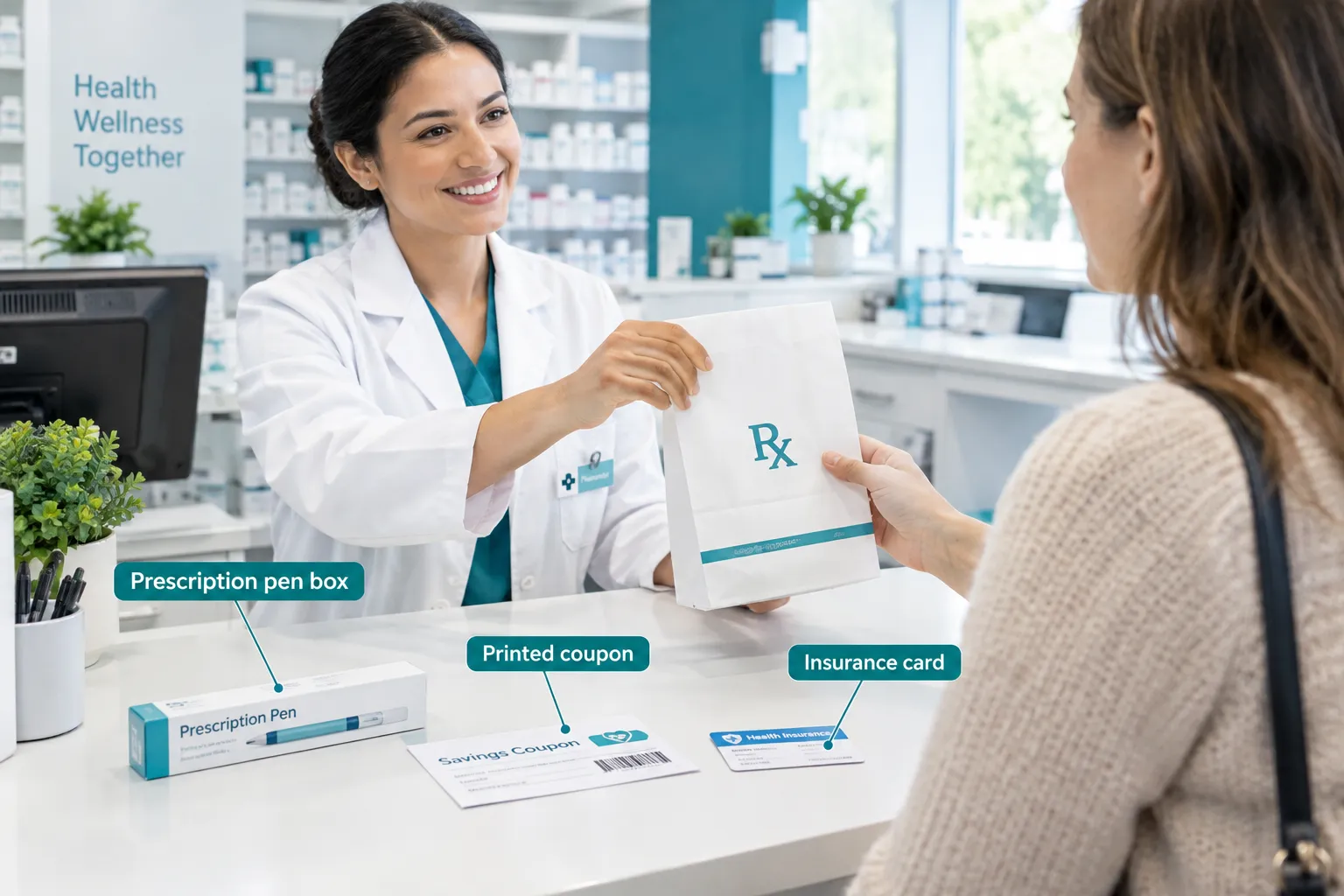
Patients typically inject Zepbound once a week using a prefilled pen or vial, starting at a low dose and increasing gradually over several weeks. The medication is paired with a reduced-calorie diet and increased physical activity, and clinical use generally continues for months or years to maintain results. For a broader look at medically supervised approaches to weight management, see this guide to weight loss programs and strategies.
Choose Zepbound if you have a BMI of 30 or higher (or 27+ with a condition like high blood pressure or type 2 diabetes) and your doctor confirms it is medically appropriate. It is not intended for cosmetic weight loss of a few pounds.
TrumpRx Zepbound Price: How to Get Weight Loss Savings Without Insurance
Without insurance, the TrumpRx Zepbound price starts at $299 per month for the 2.5 mg starting dose, rising to $399 for 5 mg and around $449 for higher maintenance doses.[9] TrumpRx.gov routes shoppers to LillyDirect, Eli Lilly’s direct-to-consumer pharmacy, which fulfills the discounted cash orders.[1][2][10]
Here is how the self-pay pricing breaks down based on current reference data:
| Dose | Approximate monthly self-pay price | Source channel |
|---|---|---|
| 2.5 mg | $299 | TrumpRx / LillyDirect KwikPen[2][9] |
| 5 mg | $399 | LillyDirect / Drugs.com pricing guide[9] |
| Higher maintenance doses | ~$449,$550 | LillyDirect self-pay reporting[9] |
A few important notes:
- TrumpRx explicitly labels its listed prices as out-of-pocket cash prices, not insurance copays.[1]
- The platform exists to target cash-pay customers, meaning people who are either uninsured or choosing not to bill their insurance.
- Industry reporting notes that LillyDirect’s 5 mg self-pay price (around $550 per month) is roughly half the $1,060 list price typically billed to insurers before rebates, which shows the gap between list pricing and direct cash offers.
Common mistake: assuming the TrumpRx price automatically applies at any pharmacy. In practice, you either order through LillyDirect or bring a TrumpRx coupon to a participating pharmacy, it is not a universal discount applied everywhere.[1]
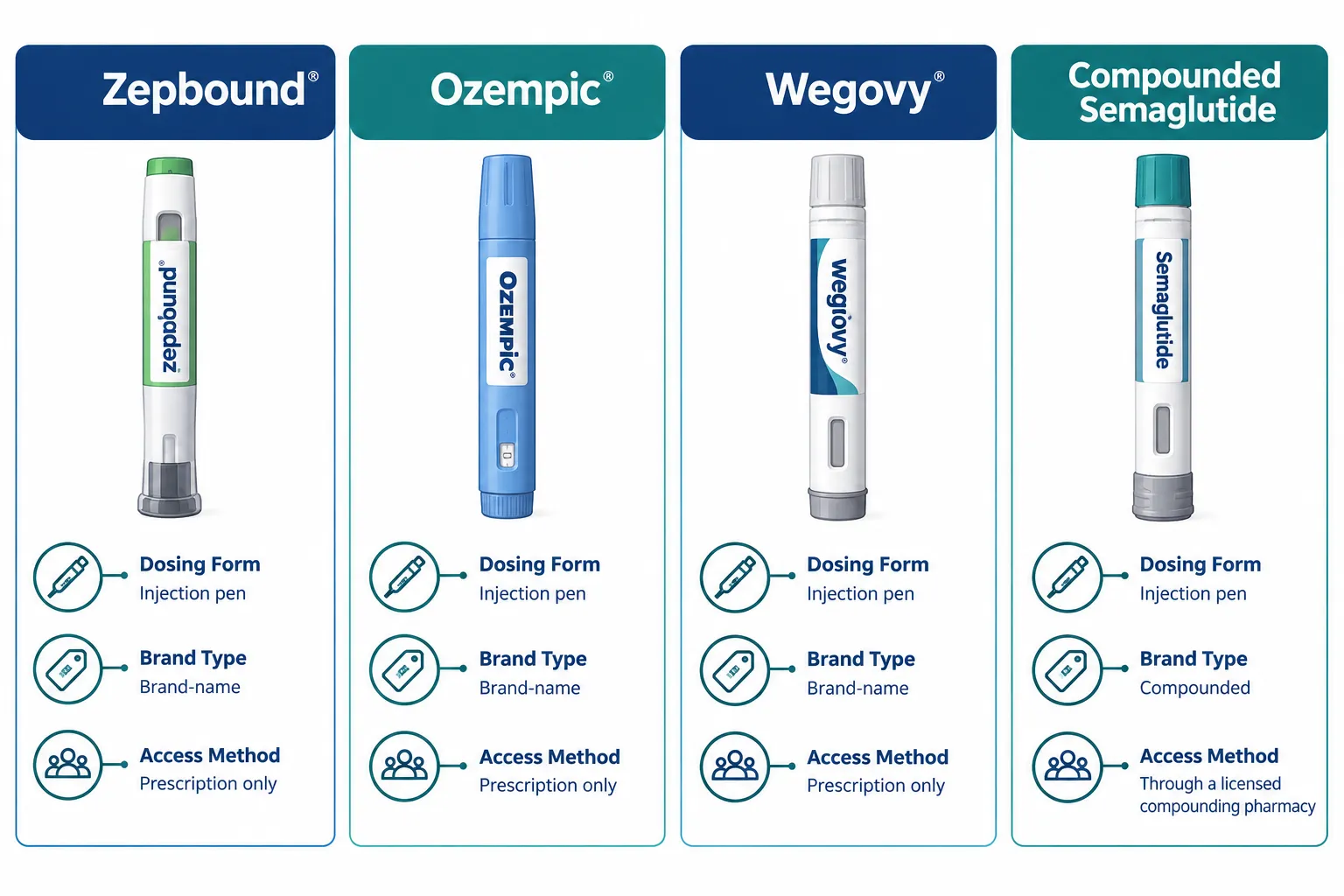
Zepbound Price Comparison With Ozempic and Wegovy
Zepbound’s self-pay pricing through TrumpRx and LillyDirect is generally competitive with, or lower than, cash prices for Ozempic and Wegovy, though exact comparisons depend on dose and pharmacy.[9] Zepbound and Wegovy are both approved specifically for weight management, while Ozempic is approved for type 2 diabetes and is sometimes prescribed off-label for weight loss.
Key distinctions to know:
- Zepbound (tirzepatide) targets two hormone receptors (GLP-1 and GIP), which some patients and clinicians associate with greater average weight loss in clinical settings.
- Wegovy (semaglutide) targets only the GLP-1 receptor and is also FDA-approved for obesity treatment.
- Ozempic (semaglutide) shares the same active ingredient as Wegovy but is approved for diabetes management; insurance coverage rules differ accordingly.
Decision rule: if your main goal is FDA-approved weight management and your plan does not cover any GLP-1 drug, compare the current self-pay price for each brand at LillyDirect and Novo Nordisk’s equivalent direct-to-consumer program before choosing, since promotional pricing shifts throughout the year.
Does Insurance Cover Zepbound Weight Loss Injections?
Some commercial insurance plans cover Zepbound for weight management, but coverage is inconsistent and many plans still exclude anti-obesity medications entirely.[9] Medicare Part D has historically excluded weight-loss-only indications, though coverage rules can vary by plan and diagnosis.
What determines coverage:
- Whether your employer or insurer has added an anti-obesity drug benefit to the plan.
- Whether you meet documented clinical criteria (BMI thresholds, comorbidities).
- Whether prior authorization is required before the pharmacy will fill the prescription.
Edge case: some patients are prescribed Zepbound under a diabetes or sleep apnea diagnosis rather than a weight-loss diagnosis alone, which can change how a plan processes the claim. Always confirm with your insurer directly rather than assuming coverage based on a friend’s experience.
TrumpRx Zepbound Price: How to Get Weight Loss Savings With Coupons and GLP-1 Programs
The fastest way to lower your TrumpRx Zepbound price is to combine the TrumpRx cash discount with Eli Lilly’s own savings cards, since TrumpRx functions as a front door to LillyDirect and pharmacy coupons rather than a standalone discount pharmacy.[1][2][10]
Current manufacturer programs as of October 2026 include:
- Zepbound Savings Card (covered benefit): For commercially insured patients whose plan covers Zepbound. Eligible adults can pay as little as $25 for a 1-, 2-, or 3-month supply of the single-dose pen, with up to 13 fills per calendar year and annual savings caps near $1,300 to $1,950 depending on dose.[3][7]
- Non-covered benefit Savings Card: For insured patients whose plan excludes Zepbound. This card drops the price to as low as $499 for a one-month fill, calculated as wholesale acquisition cost minus $499, also capped at 13 fills per year.[3][4][7]
- KwikPen Self-Pay Savings Card: Announced by Lilly in March 2026, available to all patients including the uninsured, starting at $299 per month for 2.5 mg through LillyDirect and major pharmacies. This applies to the KwikPen only, not vials or single-dose pens.[2][10]
- Taltz-linked Zepbound discount: A narrower 2026 program for patients already taking Lilly’s Taltz who are also prescribed Zepbound, offering as low as $25 per month with an annual cap up to $3,835.[5]
Choose the covered-benefit card if your insurance already lists Zepbound as a covered drug. Choose the self-pay KwikPen card if you have no insurance or your plan does not cover GLP-1 medications at all.
Most of these cards expire December 31, 2026, and analysts expect Lilly to issue refreshed terms for 2027, though exact pricing and eligibility have not yet been announced.[3][4][5][7]
Zepbound Injection Pen Refill Costs Per Month
Monthly refill costs depend entirely on dose, insurance status, and which savings program you use, ranging from roughly $25 (insured, covered benefit) to $550 (uninsured, higher dose, no discount applied).[3][7][9] Refills are typically billed monthly because Zepbound is dispensed as a 28-day supply per fill.
A simple way to estimate your likely monthly cost:
- Insured with Zepbound coverage + Savings Card: $25,$150 per month, depending on dose.[3][7]
- Insured without Zepbound coverage + non-covered card: $499+ per month.[3][4][7]
- Uninsured using TrumpRx/LillyDirect self-pay: $299,$550 per month.[2][9]
- No discount applied at all: can exceed $1,000 per month at list price before rebates.
Common mistake: forgetting that savings cards cap the number of fills per year (usually 13). If you refill more than once a month or miss a renewal deadline, you may lose the discount for that fill.
Zepbound vs Compounded Semaglutide: Price Difference
Compounded semaglutide, made by compounding pharmacies rather than Eli Lilly or Novo Nordisk, has often been cheaper than brand-name Zepbound on a per-month basis, but it is a different drug (semaglutide, not tirzepatide) and carries different regulatory oversight. Compounded versions are not FDA-approved products and quality can vary by pharmacy.
Key differences to weigh:
- Regulation: Zepbound is FDA-approved and manufactured under strict quality controls; compounded semaglutide is produced under more limited oversight, typically allowed only during drug shortages or for patients with documented medical need for a compounded formulation.
- Price: Compounded semaglutide has historically undercut brand pricing, though prices vary widely by compounding pharmacy and dose.
- Active ingredient: Zepbound uses tirzepatide (dual GLP-1/GIP), while compounded products generally use semaglutide (GLP-1 only), so the two are not interchangeable in effect.
Decision rule: if cost is your primary driver and you are comfortable with a different active ingredient and less regulatory oversight, compounded semaglutide may be an option to discuss with your prescriber. If you want an FDA-approved product with manufacturer-backed savings programs, the TrumpRx Zepbound price path through LillyDirect is the more predictable route.
How to Qualify for the TrumpRx Zepbound Price Weight Loss Savings Program
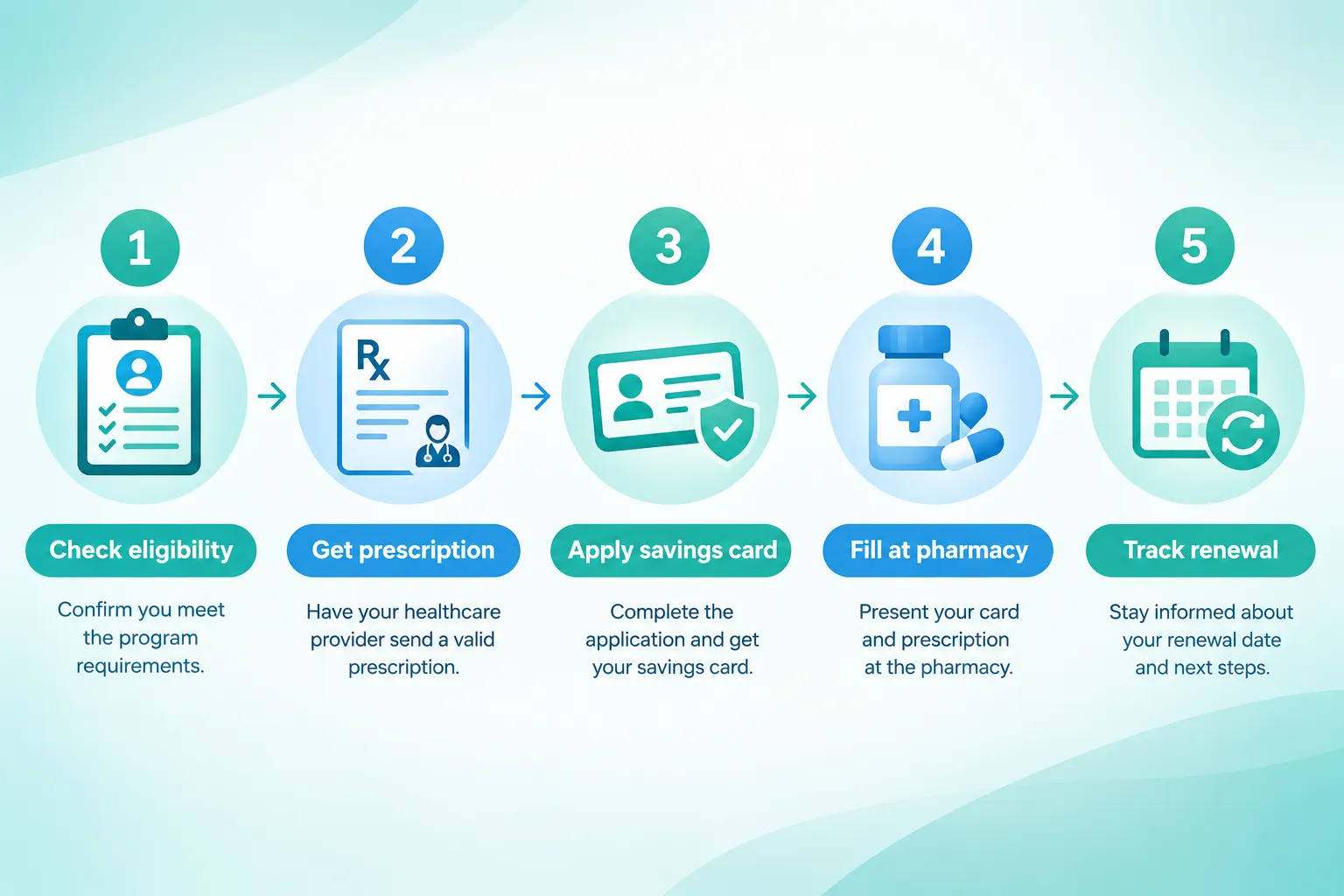
Qualifying for TrumpRx Zepbound pricing requires an active prescription for Zepbound and a willingness to pay cash rather than bill insurance for that specific purchase.[1] Qualifying for the additional Lilly Savings Cards layered on top requires commercial (non-government) insurance and a valid, on-label prescription.[3][6][9]
Step-by-step checklist:
- Get evaluated by a licensed prescriber and confirm you meet clinical criteria for Zepbound (BMI 30+, or 27+ with a qualifying condition).
- Ask your prescriber to send the prescription to LillyDirect or a participating pharmacy.
- Visit the TrumpRx.gov Zepbound page to view current cash pricing and generate a coupon.[1]
- If you have commercial insurance, check with Lilly’s savings card portal to see whether the covered-benefit or non-covered-benefit card applies to you.[3][4][7]
- Confirm your eligibility status: Medicare, Medicaid, CHIP, and TRICARE enrollees cannot use Lilly’s copay cards, though TrumpRx cash pricing itself may still be an option.[6][9]
Edge case: if you have government insurance but still want a lower cash price than your plan’s copay, you can sometimes pay the TrumpRx cash price directly instead of billing insurance, though this payment will not count toward your deductible.
Zepbound Side Effects and Who Shouldn’t Take It
The most common Zepbound side effects are gastrointestinal, including nausea, diarrhea, constipation, and vomiting, especially during dose increases. Zepbound carries a boxed warning related to thyroid C-cell tumors seen in animal studies, and it is not recommended for people with a personal or family history of medullary thyroid carcinoma or Multiple Endocrine Neoplasia syndrome type 2.
Who should avoid or discuss carefully with a doctor before starting:
- People with a history of pancreatitis.
- People who are pregnant, planning pregnancy, or breastfeeding.
- People with severe gastrointestinal disease.
- People with a known hypersensitivity to tirzepatide or any component of the formulation.
If you experience severe abdominal pain, signs of an allergic reaction, or vision changes, contact your prescriber immediately rather than waiting for your next appointment. For general guidance on health conditions that affect medication suitability, see this overview of women’s health topics and this resource on men’s health considerations.
Is Zepbound Worth the Cost? What Reviews Say
Whether Zepbound is worth the cost depends on your insurance situation, your weight-loss goals, and how your body responds to the medication; patient discussions on forums like Reddit frequently describe meaningful weight loss but also note the financial burden without insurance coverage. Many users report that the first few months bring the most noticeable appetite changes, with side effects tapering as the body adjusts to each dose increase.
Patterns commonly reported by patients include:
- Significant appetite reduction within the first one to two months.
- Steady, gradual weight loss rather than rapid drops.
- Cost as the single biggest barrier to staying on the medication long-term.
- Frustration when insurance denies coverage after a prior authorization appeal.
“The medication works, but figuring out how to afford it month after month is its own project,” is a sentiment echoed across many online patient communities discussing GLP-1 drugs.
Choose Zepbound if you have realistic expectations about gradual results and a plan to afford it for at least six to twelve months, since short courses rarely produce lasting results.
What Happens If You Stop Taking Zepbound, and What to Do If It Is Not Working
Stopping Zepbound typically leads to a gradual return of appetite and, for many patients, partial or full regain of lost weight over the following months, since the medication does not permanently change metabolism or hunger signaling on its own. If Zepbound does not seem to be working, the first step is to confirm you are on an adequate dose and have given it enough time, typically at least 8 to 12 weeks after reaching a stable dose, before concluding it is ineffective.
If progress has stalled, consider these next steps with your prescriber:
- Review your injection technique and storage to rule out a dosing error.
- Ask about a dose increase if you have not yet reached the maintenance dose.
- Reassess diet and activity levels, since the medication works best alongside lifestyle changes.
- Discuss whether a different GLP-1 or dual-agonist medication might suit your biology better.
Common mistake: stopping cold turkey without a tapering or maintenance plan, then being surprised by rapid appetite rebound. Talk to your prescriber about a transition plan before discontinuing.
Where to Buy Zepbound Online Safely
The safest way to buy Zepbound online is directly through LillyDirect, Eli Lilly’s official pharmacy platform, or through a TrumpRx.gov coupon redeemed at a licensed, participating pharmacy.[1][2][10] Avoid unverified websites selling “Zepbound” without requiring a prescription, since these sources carry a high risk of counterfeit or mishandled product.
Checklist for safe purchasing:
- Confirm the website requires a valid prescription before dispensing.
- Verify the pharmacy is licensed in your state or country.
- Use TrumpRx.gov or LillyDirect links directly rather than third-party search ads.[1][2]
- Check that shipping includes proper cold-chain packaging, since Zepbound requires refrigeration.
If you are researching broader wellness and lifestyle support alongside a GLP-1 regimen, this wellness resource hub and this collection of plant-based healthy recipes can support dietary habits that complement weight-loss treatment. You can also browse general health guidance on the Health Trust MD homepage.
Frequently Asked Questions
What is the current TrumpRx Zepbound price? As of October 2026, TrumpRx-linked self-pay pricing starts at $299 per month for the 2.5 mg dose and $399 for the 5 mg dose, fulfilled through LillyDirect.[2][9]
Does TrumpRx replace my insurance copay? No. TrumpRx prices are cash prices for people paying out of pocket, and they are separate from insurance copays.[1]
Can Medicare patients use TrumpRx for Zepbound? Medicare enrollees cannot use Lilly’s manufacturer copay cards, but TrumpRx cash pricing itself may still be viewed as an option for direct purchase.[6][9]
How much can I save with Lilly’s Zepbound Savings Card? Eligible commercially insured patients with Zepbound coverage can pay as little as $25 per month, with annual savings capped near $1,300 to $1,950 depending on dose and card version.[3][7]
Is compounded semaglutide cheaper than Zepbound? Compounded semaglutide has often been priced lower than brand-name Zepbound, but it uses a different active ingredient and has less regulatory oversight.[8]
When do current Zepbound savings cards expire? Most current cards, including TrumpRx-linked offers, are scheduled to expire December 31, 2026, with updated terms expected for 2027.[3][4][5][7]
What happens if I stop taking Zepbound? Appetite typically returns gradually, and many patients regain some or all of the lost weight over the following months without continued treatment or lifestyle maintenance.
Is Zepbound safe for everyone? No. It is not recommended for people with a personal or family history of medullary thyroid carcinoma, Multiple Endocrine Neoplasia type 2, or certain gastrointestinal conditions. Always confirm eligibility with a licensed prescriber.
Conclusion
The TrumpRx Zepbound price makes brand-name tirzepatide meaningfully more affordable for people paying cash, with KwikPen pricing starting at $299 per month through LillyDirect.[1][2] But the real savings strategy depends on your insurance status: insured patients with Zepbound coverage should prioritize Lilly’s Savings Card for prices as low as $25 per month, while uninsured patients get the most value from TrumpRx cash pricing combined with the self-pay KwikPen card.[3][7]
Before you start, confirm your prescription is on-label, check your specific insurance plan’s coverage rules, and compare the TrumpRx.gov Zepbound page against LillyDirect’s current self-pay offers, since pricing and card terms are set to refresh after December 31, 2026.[1][2][3][4][5][7] Talk to your prescriber about dosing, side effects, and a realistic timeline, and revisit your savings options every few months since manufacturer programs change throughout the year.
References
[1] Zepbound – https://trumprx.gov/p/zepbound [2] Media Statement Zepbound Tirzepatide Kwikpen Now Available Self – https://investor.lilly.com/news-releases/news-release-details/media-statement-zepbound-tirzepatide-kwikpen-now-available-self [3] Zepbound – https://www.drugs.com/price-guide/zepbound [4] Zepbound Savings Card Non Covered Benefit – https://prescriberpoint.com/therapies/zepbound-487cd7e/financial-assistance/zepbound-savings-card—non-covered-benefit [5] Pharmacy Leave Behind – https://taltz.lilly.com/assets/pdf/pharmacy-leave-behind.pdf [6] Zepbound Cost Without Insurance Insurance 3578715 – https://www.drugs.com/medical-answers/zepbound-cost-without-insurance-insurance-3578715/ [7] Lilly Direct Zepbound – https://prescriberpoint.com/therapies/zepbound-487cd7e/financial-assistance/lilly-direct-zepbound [8] myzepbound.ca – https://myzepbound.ca/ [9] Zepbound Covered Insurance 3577162 – https://www.drugs.com/medical-answers/zepbound-covered-insurance-3577162/ [10] Trump Rx White House Launches Direct To Consumer Drug Site – https://www.cnbc.com/2026/02/05/trump-rx-white-house-launches-direct-to-consumer-drug-site.html