Donald Trump Prescription Drug Prices: Complete Breakdown of Savings Plans
Last updated: October 17, 2026
Quick Answer
Donald Trump Prescription Drug Prices: Complete Breakdown of Savings Plans centers on three connected pieces: Most Favored Nation (MFN) pricing rules that tie US drug costs to lower prices paid abroad, the direct-to-consumer site TrumpRx.gov, and a series of manufacturer-specific discount deals. Together these programs apply to Medicaid enrollees nationwide, to patients buying directly through TrumpRx.gov, and to specific drugs covered under negotiated manufacturer agreements, but coverage varies by drug, by state, and by whether a patient uses Medicare, Medicaid, or pays out of pocket.
Key Takeaways
- MFN pricing now applies to every state Medicaid program as of September 2026, linking US drug costs to the lowest price paid in comparable wealthy nations [1][4].
- TrumpRx.gov launched in February 2026 as a direct-to-consumer portal letting patients buy certain brand-name drugs without going through traditional insurance markups [2][6].
- Nine additional pharmaceutical manufacturers signed pricing agreements in August 2026, expanding the list of drugs with negotiated discounts [8].
- The administration has described the 2026 price changes as the largest prescription drug price drop in over 60 years, though independent verification of that framing is limited [3].
- Medicare beneficiaries can access some savings through existing negotiation programs, but TrumpRx.gov itself is built mainly for direct cash-pay purchases outside insurance [2][6].
- Coverage is drug-specific and manufacturer-specific, not blanket, so not every prescription qualifies for the same discount [8].
- The plan differs from Biden-era Medicare price negotiation by extending MFN pricing to Medicaid and by adding a direct-purchase website rather than relying only on CMS-led negotiation.
- Common mistakes include assuming all insurance works with TrumpRx, assuming every drug is discounted, and skipping eligibility checks before expecting Medicaid rebate savings.
What Did Trump Do About Prescription Drug Prices
Trump’s prescription drug price strategy combines Most Favored Nation pricing rules, a new direct purchase website, and individual deals with drug manufacturers. The goal, according to White House materials, is to tie US drug prices closer to what other wealthy countries pay and to let patients buy some drugs directly at lower cost [1][3][5].
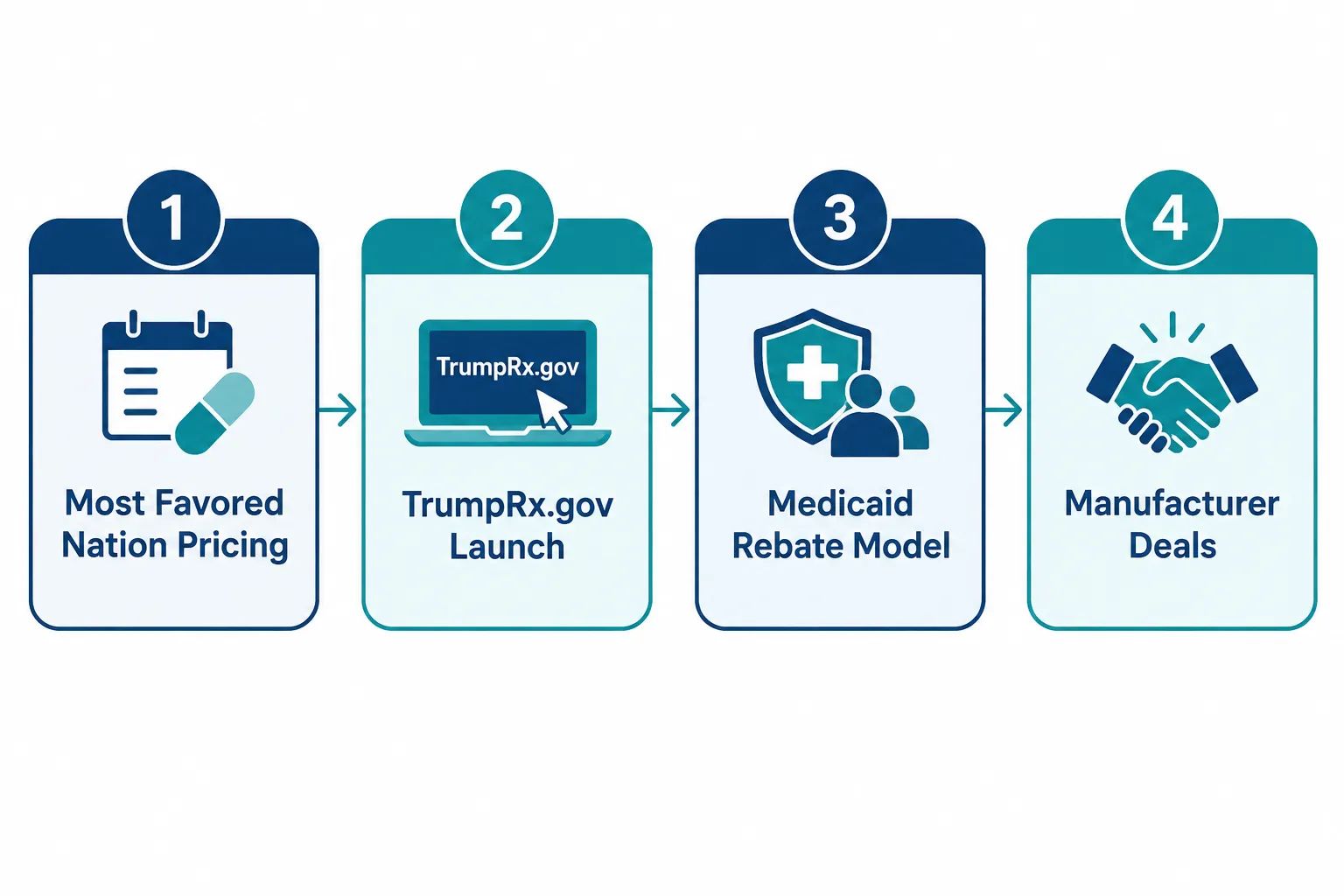
The policy framework rolled out in stages through 2026:
- January 2026: The administration unveiled “The Great Healthcare Plan,” an umbrella policy framing drug pricing reform as part of a broader cost-reduction agenda, including proposals to send savings directly to patients [5][10].
- February 2026: TrumpRx.gov launched as the direct-to-consumer savings platform, letting patients search for and purchase certain drugs at discounted, manufacturer-set prices [2][6].
- May 2026: Administration research outlined projected ten-year savings from MFN pricing policy applied broadly across federal drug purchasing [7][9].
- August 2026: Nine additional manufacturers joined pricing agreements, and the administration announced what it called the largest prescription drug price drop in over 60 years [3][8].
- September 2026: MFN pricing extended to every state Medicaid program in the country [1][4].
Decision rule: If you want to understand whether a specific drug is cheaper right now, check TrumpRx.gov first for direct-purchase pricing, then check with your state Medicaid office if you’re a Medicaid enrollee, since the MFN rebate structure runs through state programs rather than private insurance.
Donald Trump Prescription Drug Prices: Complete Breakdown of Savings Plans: The Core Programs
The full Donald Trump Prescription Drug Prices: Complete Breakdown of Savings Plans rests on three structural pillars: MFN pricing, TrumpRx.gov, and manufacturer-specific deals layered under the GENEROUS Medicaid Payment Model. Each pillar targets a different buyer: state Medicaid programs, direct-to-consumer cash purchasers, and patients whose drugs fall under manufacturer agreements [1][2][8].
Here is how the pieces fit together:
| Program | What It Does | Who It Reaches |
|---|---|---|
| Most Favored Nation (MFN) pricing | Caps certain drug prices at the lowest price paid by comparable wealthy nations | State Medicaid programs nationwide [1][4] |
| TrumpRx.gov | Direct-to-consumer marketplace for buying select drugs without standard insurance markup | Cash-pay patients and uninsured individuals [2][6] |
| GENEROUS Medicaid Payment Model | Links Medicaid rebates to MFN benchmark pricing | Medicaid enrollees and state agencies [4] |
| Manufacturer-specific deals (e.g., Pfizer) | Negotiated discount pricing on named drugs sold through TrumpRx.gov | Patients prescribed those specific drugs [8] |
A concrete example: a manufacturer deal announced in 2026 made certain Pfizer products available through TrumpRx.gov at a reduced direct price, separate from standard pharmacy benefit pricing [8]. That is different from MFN pricing, which affects what state Medicaid programs pay the manufacturer, not necessarily what a cash-pay customer sees on a retail shelf.
Common mistake: Treating these three pillars as one single program. A drug discounted under a manufacturer deal on TrumpRx.gov may not be the same drug affected by MFN Medicaid rebates. Always confirm which pillar applies to your specific prescription before assuming a price drop applies to you.
How Much Money Can You Save With Trump’s Drug Price Plan
Savings vary by program and by drug, and the administration’s own ten-year outlook frames MFN pricing as producing substantial federal and patient-level savings over time rather than a single uniform discount [7][9]. There is no single dollar figure that applies to every patient, because savings depend on the specific drug, the payer (Medicaid versus cash-pay), and whether a manufacturer has signed an MFN-linked agreement.
Factors that determine your actual savings:
- Which drug you take. Only drugs covered by MFN agreements or manufacturer deals see direct pricing changes [8].
- How you pay. Medicaid enrollees access savings through state rebate structures; cash-pay patients may see different pricing through TrumpRx.gov [2][4].
- Where you live. MFN pricing now applies in all 50 state Medicaid programs, but state-level administration and timing of rollout can differ [1][4].
- Obesity-drug programs. A Medicare obesity-drug savings initiative has produced specific uptake among beneficiaries using covered weight-management medications, reflecting one of the more visible real-world savings programs under this framework.
Edge case: If your drug isn’t part of an MFN agreement or a manufacturer deal, you likely will not see a price change from these specific programs, even though the broader policy exists. Check TrumpRx.gov’s drug list directly rather than assuming your prescription qualifies.
Is Trump’s Prescription Drug Plan Still in Effect, and How Does It Compare to Biden’s and Obama’s Plans
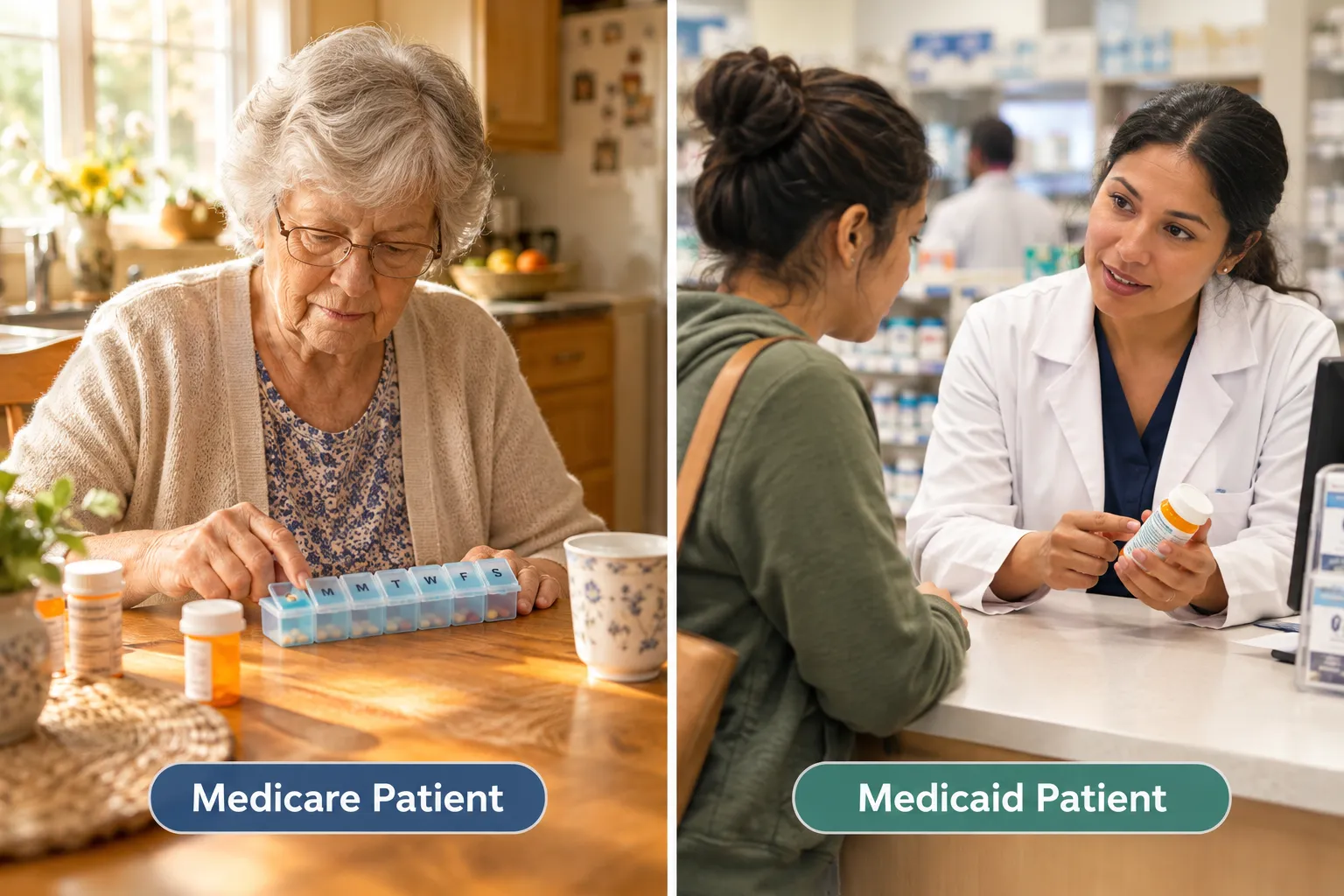
Yes, as of the most recent White House releases in September 2026, the MFN Medicaid extension and TrumpRx.gov are active and operating [1][2][4]. The plan differs from the Biden administration’s approach, which centered on Medicare price negotiation authority created under the Inflation Reduction Act, and from the Obama-era Affordable Care Act, which focused on insurance coverage expansion rather than direct price-setting mechanisms tied to international benchmarks.
Key structural differences:
- Biden’s approach: Relied on CMS-led negotiation for a limited list of Medicare Part D drugs, phased in over several years, with prices negotiated directly between the federal government and manufacturers for specific high-cost drugs.
- Trump’s approach: Extends MFN benchmark pricing to Medicaid nationwide, adds a direct consumer-facing purchase platform (TrumpRx.gov), and pursues individual manufacturer agreements outside the formal CMS Medicare negotiation list [1][2][8].
- Obama’s approach: Focused primarily on expanding insurance access through the ACA marketplace rather than direct drug price controls, with limited direct mechanisms for lowering list prices.
Decision rule: If you’re comparing eras, think of Biden’s plan as negotiation-based and Medicare-specific, Trump’s plan as benchmark-based and Medicaid-plus-direct-purchase, and Obama’s plan as coverage-based rather than price-based. These are different tools aimed at overlapping but distinct problems.
Earlier Medicare drug-pricing reforms, including negotiation authority established before 2026, feed into the current strategy, meaning the Trump administration built its MFN and TrumpRx programs on top of an existing Medicare negotiation framework rather than replacing it entirely.
Which Prescription Drugs Are Covered Under Trump’s Price Negotiation
Coverage depends on which manufacturer has signed an agreement and which program you’re referencing; there is no single master list covering every prescription drug in the country. As of August 2026, nine additional pharmaceutical manufacturers joined existing pricing agreements, expanding the roster of drugs available at negotiated prices through TrumpRx.gov [8].
What this means in practice:
- Drugs from manufacturers that have signed MFN-linked agreements are more likely to show discounted pricing on TrumpRx.gov.
- Medicaid’s MFN rebate structure applies based on manufacturer participation and drug category, not a universal list covering every brand-name or generic drug [1][4].
- Obesity medications have a dedicated Medicare savings track, separate from the general TrumpRx.gov catalog, reflecting the high demand and high cost of that drug category.
Quick example: A patient prescribed a Pfizer product included in the August 2026 manufacturer agreement may find it listed on TrumpRx.gov at a negotiated price [8]. A patient prescribed a drug from a manufacturer that has not signed an agreement will not see the same direct discount, even if the drug treats a similar condition.
Common mistake: Assuming brand-name status alone determines discount eligibility. Participation is manufacturer-specific and drug-specific, so two similar drugs from different companies can have very different pricing outcomes.
Can You Get Trump’s Drug Discounts If You Have Medicare: Eligibility Requirements
Medicare beneficiaries can access some savings tied to this policy framework, particularly through the Medicare obesity-drug savings program, but the TrumpRx.gov platform itself is built primarily for direct, cash-pay purchases rather than running through Medicare Part D claims. Eligibility depends on which specific program you’re trying to use.
Eligibility breakdown:
- Medicare Part D beneficiaries: May benefit from existing Medicare drug price negotiation for select high-cost drugs, a program that predates and feeds into the current 2026 strategy.
- Medicare obesity-drug savings program: Specifically targets Medicare enrollees using covered weight-management medications, with documented real-world uptake among that population.
- Medicaid enrollees: Automatically fall under the MFN-linked rebate structure now active in all 50 states as of September 2026, since this runs through state Medicaid programs directly [1][4].
- Cash-pay or uninsured patients: Primary audience for TrumpRx.gov’s direct-purchase pricing, which operates outside standard insurance billing [2][6].
Who this is not for: If you have employer-sponsored private insurance and your plan already negotiates its own formulary discounts, TrumpRx.gov’s direct-purchase pricing may or may not beat your existing copay, so it’s worth comparing both before switching how you buy a prescription.
For readers managing broader health goals alongside medication costs, our guides on men’s health and women’s health cover related chronic condition management that often intersects with prescription drug spending.
Did Trump’s Drug Price Plan Actually Lower Prices for Patients
The White House reported what it called the largest prescription drug price drop in over 60 years following the August 2026 manufacturer agreements, though this figure reflects administration reporting rather than independent third-party verification [3]. Real-world impact varies depending on which drug, which payer, and which program a patient is using.
What we can say with reasonable confidence based on available sources:
- MFN pricing extended to Medicaid in September 2026 represents a structural change in how state programs pay for drugs, not just a one-time price cut [1][4].
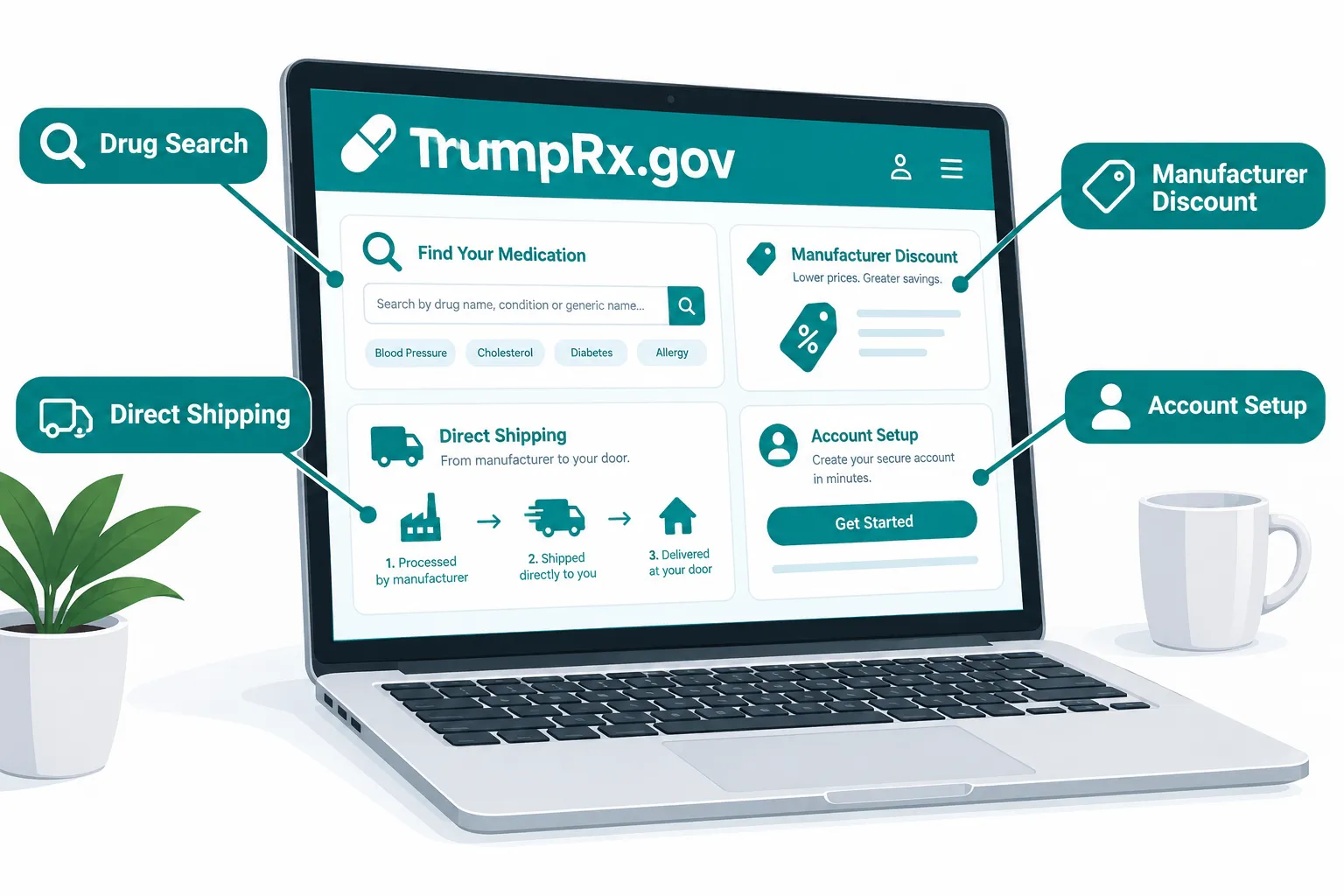
- TrumpRx.gov created a new purchasing channel that did not previously exist, giving cash-pay patients a direct option they didn’t have before February 2026 [2][6].
- The administration’s own ten-year savings projections describe MFN policy as producing cumulative savings over time, which is a different claim than an immediate uniform price cut for every patient right now [7][9].
Edge case: A patient whose specific drug isn’t part of an MFN agreement or manufacturer deal won’t experience a measurable price change from this policy, even in a year the administration describes as having delivered historic price drops overall. Aggregate claims about national price drops don’t guarantee an individual reduction on every prescription.
Readers tracking broader wellness and cost-of-care trends may also find value in our wellness resources, which cover strategies for managing overall health spending.
How Do I Apply for Trump’s Prescription Drug Savings Program
There is no single universal application; the process depends on which program applies to your situation, your drug, and your insurance status. Medicaid enrollees typically don’t need to apply separately since MFN rebates run through state program administration automatically, while TrumpRx.gov requires account setup for direct purchases [1][2].
Step-by-step approach:
- Check your current coverage. Confirm whether you’re on Medicaid, Medicare, private insurance, or uninsured, since each path differs.
- Search TrumpRx.gov for your specific drug by name to see if it’s listed under a manufacturer discount agreement [2][6].
- Confirm deductible and out-of-pocket details. TrumpRx.gov purchases have specific policy rules around deductibles and out-of-pocket limits that differ from standard insurance claims, so review these before buying.
- Contact your state Medicaid office if you’re a Medicaid enrollee wondering whether a specific drug’s rebate has reduced your cost-sharing.
- Ask your pharmacist whether your prescribed drug is part of a manufacturer agreement, since pharmacy staff often have updated participation lists.
- Compare total cost between your current insurance copay and the TrumpRx.gov direct price before switching purchase channels, since direct purchase isn’t automatically cheaper for every patient.
Common mistake: Assuming you need to “enroll” in a government program the way you would for Medicare or Medicaid. TrumpRx.gov functions more like an online pharmacy storefront with built-in discount pricing than a benefits enrollment system.
Restrictions, Insurance Compatibility, and Common Mistakes With Trump’s Drug Savings
Yes, there are real restrictions: not every insurance plan integrates with TrumpRx.gov, not every drug is covered, and deductible rules for direct purchases differ from standard insurance claims. Understanding these limits prevents disappointment and wasted time.
Key restrictions to know:
- Insurance compatibility: TrumpRx.gov is designed mainly for direct cash-pay transactions, so patients using private insurance should check whether a direct purchase counts toward their plan’s deductible or whether it’s treated as a separate, out-of-pocket transaction [2].
- Deductible and out-of-pocket rules: Policy details specify how TrumpRx.gov purchases interact with deductibles and out-of-pocket maximums, and these rules can mean a direct purchase doesn’t count the same way a normal insurance claim would.
- Drug-specific limits: Only drugs tied to MFN agreements, manufacturer deals, or Medicaid rebate structures see pricing changes; the rest of the prescription drug market is unaffected by these specific programs [8].
- State-level rollout differences: While MFN pricing now covers all 50 state Medicaid programs, administrative timing and rebate processing can still vary by state [1][4].
Common mistakes patients make:
- Assuming every prescription is discounted because of general news coverage about “Trump drug prices.”
- Not checking whether a TrumpRx.gov purchase affects insurance deductible tracking before buying.
- Confusing manufacturer-specific deals (like the Pfizer agreement) with the broader MFN Medicaid policy, which are two different mechanisms [1][8].
- Skipping a direct comparison between insurance copay and TrumpRx.gov cash price, which can sometimes mean overpaying by switching unnecessarily.
Decision rule: Choose TrumpRx.gov direct purchase if you’re uninsured, underinsured, or your insurance copay is higher than the listed direct price. Stick with your existing insurance claim if your copay is already lower and the direct purchase won’t count toward your deductible.
For readers managing weight-related prescriptions, including obesity medications now tied to a dedicated Medicare savings track, our weight loss resources offer additional context on managing both cost and treatment approach.
FAQ
What did Trump do about prescription drug prices? Trump’s administration extended Most Favored Nation pricing to all state Medicaid programs, launched the TrumpRx.gov direct-purchase platform, and signed individual pricing agreements with multiple pharmaceutical manufacturers through 2026 [1][2][8].
How much money can you save with Trump’s drug price plan? Savings depend on your specific drug and payer type; there is no single dollar figure, but the administration projects substantial cumulative savings over a ten-year outlook from MFN pricing policy [7][9].
Is Trump’s prescription drug plan still in effect? Yes, as of September 2026, MFN Medicaid pricing and TrumpRx.gov are both active and operating nationwide [1][4].
How does Trump’s drug pricing plan compare to Biden’s? Biden’s plan centered on CMS-led Medicare negotiation for a limited drug list, while Trump’s plan extends MFN benchmark pricing to Medicaid and adds a direct consumer purchase platform outside the standard Medicare negotiation process.
Which prescription drugs are covered under Trump’s price negotiation? Coverage is limited to drugs from manufacturers with signed MFN or TrumpRx agreements, including nine additional manufacturers added in August 2026; not every drug on the market is included [8].
Can you get Trump’s drug discounts if you have Medicare? Some Medicare beneficiaries benefit through the dedicated obesity-drug savings program and existing Medicare negotiation rules, but TrumpRx.gov itself is built mainly for direct cash-pay purchases, not standard Part D claims.
What are the eligibility requirements for Trump prescription drug savings? Eligibility depends on the program: Medicaid enrollees are covered automatically under MFN rebates, while TrumpRx.gov is open to any patient wanting to purchase eligible drugs directly, insured or not [1][2].
Did Trump’s drug price plan actually lower prices for patients? The administration reported what it called the largest prescription drug price drop in over 60 years following 2026 manufacturer deals, though this reflects official reporting and results vary by individual drug [3].
How do I apply for Trump’s prescription drug savings program? There’s no single application; check TrumpRx.gov for your specific drug, confirm Medicaid status with your state office if applicable, and compare pricing against your current insurance copay before switching [2].
What’s the difference between Trump and Obama on drug prices? Obama’s Affordable Care Act focused on expanding insurance coverage rather than direct price controls, while Trump’s current plan directly ties Medicaid pricing to international benchmarks and adds a direct-purchase marketplace.
Are there restrictions with Trump’s drug plan? Yes, restrictions include drug-specific eligibility, deductible rules that differ from standard insurance claims, and limited integration with some private insurance plans.
How much did Trump negotiate drug prices down by? The administration described 2026 changes as producing the largest drug price drop in over 60 years following manufacturer agreements, though the exact percentage varies by individual drug and manufacturer deal [3][8].
Conclusion
Donald Trump Prescription Drug Prices: Complete Breakdown of Savings Plans comes down to three working parts: Medicaid-wide MFN pricing, the TrumpRx.gov direct-purchase platform, and a growing list of manufacturer-specific deals. None of these function as a single blanket discount covering every prescription in America, and that’s the detail most people miss when they hear headlines about historic price drops.
If you want to know whether you personally save money, start with three concrete steps: check TrumpRx.gov for your exact drug name, confirm your Medicaid or Medicare status with the relevant agency, and compare any direct-purchase price against your current insurance copay before changing how you buy your medication. Pay attention to deductible rules, since a direct purchase might not count toward your insurance plan the way a normal claim would.
This policy area is still moving, with new manufacturer agreements and state-level rollout details changing through 2026. Check official sources like TrumpRx.gov and your state Medicaid office directly rather than relying on secondhand summaries, and revisit your own prescription list periodically since drug-specific coverage under these programs continues to expand.
References
[1] President Trump Extends Most Favored Nation Pricing To Every Medicaid Program In America – https://www.whitehouse.gov/releases/2026/09/president-trump-extends-most-favored-nation-pricing-to-every-medicaid-program-in-america/ [2] Fact Sheet President Donald J Trump Launches Trumprx Gov To Bring Lower Drug Prices To American Patients – https://www.whitehouse.gov/fact-sheets/2026/02/fact-sheet-president-donald-j-trump-launches-trumprx-gov-to-bring-lower-drug-prices-to-american-patients/ [3] President Trump Delivers Largest Prescription Drug Price Drop In Over 60 Years – https://www.whitehouse.gov/releases/2026/08/president-trump-delivers-largest-prescription-drug-price-drop-in-over-60-years/ [4] Fact Sheet President Donald J Trump Announces Lower Drug Prices For All 50 State Medicaid Programs – https://www.whitehouse.gov/fact-sheets/2026/09/fact-sheet-president-donald-j-trump-announces-lower-drug-prices-for-all-50-state-medicaid-programs/ [5] President Trump Unveils The Great Healthcare Plan To Lower Costs And Deliver Money Directly To The People – https://www.whitehouse.gov/releases/2026/01/president-trump-unveils-the-great-healthcare-plan-to-lower-costs-and-deliver-money-directly-to-the-people/ [6] President Trump Launches Trumprx Gov Delivering Massive Immediate Savings To Millions Of Americans – https://www.whitehouse.gov/releases/2026/02/president-trump-launches-trumprx-gov-delivering-massive-immediate-savings-to-millions-of-americans/ [7] Savings From Mfn Drug Pricing Policy – https://www.whitehouse.gov/wp-content/uploads/2026/05/Savings-from-MFN-Drug-Pricing-Policy.pdf [8] Fact Sheet President Donald J Trump Announces Deal With Nine Additional Pharmaceutical Manufacturers To Lower Drug Prices For Americans – https://www.whitehouse.gov/fact-sheets/2026/08/fact-sheet-president-donald-j-trump-announces-deal-with-nine-additional-pharmaceutical-manufacturers-to-lower-drug-prices-for-americans/ [9] Savings From Most Favored Nation Drug Pricing Policy – https://www.whitehouse.gov/research/2026/05/savings-from-most-favored-nation-drug-pricing-policy/ [10] The Great Healthcare Plan – https://www.whitehouse.gov/wp-content/uploads/2026/01/The-Great-Healthcare-Plan.pdf