Fact-Checking Trump’s Claim About Drug Prices: What the Data Shows
Last updated: October 17, 2026
Quick Answer
Fact-checking Trump’s claim about drug prices shows a mixed picture: a modest, real decline in the government’s broad prescription drug price index exists, but it is smaller and less dramatic than the sweeping percentage cuts Trump has described in speeches. Independent fact-checkers and economists say several factors unrelated to the administration, plus a handful of targeted deals like Medicare negotiations and TrumpRx, explain the change. List prices for most brand-name drugs have continued to rise even as some headline figures moved lower.
Key Takeaways
- The government’s prescription drug price index has declined modestly, but Trump’s larger percentage claims are not backed by broad federal data [1].
- List prices set by drug manufacturers for most brand-name medications are still rising, even as some average or net prices fall [1].
- Experts told FactCheck.org that crediting any single administration for the entire price shift oversimplifies a trend with multiple causes [1].
- TrumpRx and deals on obesity drugs like Ozempic and Wegovy produced real discounts for some patients, but the savings are narrower than White House statements suggest [7].
- Medicare’s first round of negotiated drug prices does not take full effect immediately, and many patients will not feel savings right away [10].
- Most Favored Nation pricing and Medicaid-related proposals carry large potential numbers, but the actual impact remains uncertain until implementation details are finalized [5].
- Checking whether a drug price claim refers to list price, net price, or an index average is the single best way to spot misleading statistics.
What Did Trump Say About Drug Prices
Trump has repeatedly claimed that his administration brought drug prices down sharply, sometimes citing steep percentage drops and describing deals that would make the United States pay the “lowest prices in the world” for medications. These statements appeared in White House fact sheets, State of the Union remarks, and public announcements throughout 2025 and 2026 [2][6].
The claims generally fall into three categories:
- Broad price reduction claims, statements suggesting drug prices overall have fallen dramatically under his watch.
- Deal-specific claims, references to named agreements with drugmakers, including TrumpRx and Most Favored Nation pricing arrangements [5].
- Comparison claims, assertions that Americans now pay prices closer to what people in other wealthy countries pay for the same drugs.
FactCheck.org and other outlets reviewed these statements line by line and found that while some underlying programs are real, the scale of the claimed benefit often outpaces the evidence [1][3].
Are Drug Prices Lower Under the Trump Administration and Did Trump Lower Prescription Drug Costs
Yes, in a narrow and specific sense: a broad consumer price measure for prescription drugs has edged down, and a limited set of negotiated or discounted drugs now cost less for certain buyers. No, in the broader sense Trump often implies: most Americans are not seeing the dramatic, across-the-board savings described in speeches.
Here’s the distinction that matters:
- The headline decline shows up in a government price index that tracks a basket of drugs over time, and that index has moved down modestly [1].
- The lived experience for most patients depends on their insurance plan, pharmacy benefit manager, and whether their specific drug was part of a negotiated deal.
- Targeted programs like Medicare drug negotiation and TrumpRx apply to a limited list of medications, not the entire drug market [7][10].
A common mistake here is treating a national index decline as proof that every drug, or even most drugs, got cheaper. That is not what the data shows.
How Do Trump’s Drug Price Claims Compare to Actual Data
Fact-checking Trump’s claim about drug prices requires separating the real policy actions from the rhetoric used to describe them. FactCheck.org’s review found that while a price decline is real, calling it a result of one administration’s actions alone is “more complicated” than the public statements suggest [1].
Several points stand out when comparing rhetoric to data:
| Claim type | What Trump said | What the data shows |
|---|---|---|
| Overall price drop | Dramatic, sweeping declines | Modest decline in a broad price index [1] |
| List prices | Prices coming down everywhere | Brand-name list prices mostly still rising [1] |
| Medicare negotiation | Major savings for seniors now | Savings phased in, not fully felt yet [10] |
| TrumpRx discounts | Lowest prices in the world | Real but limited to specific drugs and programs [7] |
| MFN pricing | Massive nationwide impact | Scope and enforcement still being finalized [5] |
The pattern across these comparisons is consistent: the underlying programs exist, but the percentage figures and scope described publicly tend to run ahead of what is verifiable in federal data and independent analysis.
What Sources Fact-Check Trump’s Drug Price Statements and Which Fact-Checkers Have Reviewed His Claims
FactCheck.org has published multiple detailed reviews of Trump’s drug pricing statements, including an August 2026 analysis crediting part of the price decline to broader market forces rather than administration action alone [1], and a February 2026 piece specifically titled around misleading drug pricing deal claims [3]. FactCheck.org also fact-checked his State of the Union remarks on this topic [6].
Other useful sources for verifying these claims include:
- White House fact sheets, which describe the administration’s own framing of programs like TrumpRx and MFN pricing [2][5].
- Official government records, such as compiled presidential statements archived by GovInfo, which document exactly what was said and when [4][8][9].
- Congressional statements, including a response from Senator Ron Wyden’s office addressing Medicare negotiated drug price announcements, offering a lawmaker’s counterpoint to administration framing [10].
- Wire service reporting, including Associated Press coverage of Medicare negotiations involving drugs like Ozempic and Wegovy [7].
Reading the original White House fact sheet alongside an independent fact-check is the fastest way to see where the two diverge.
How Much Have Drug Prices Changed in Recent Years
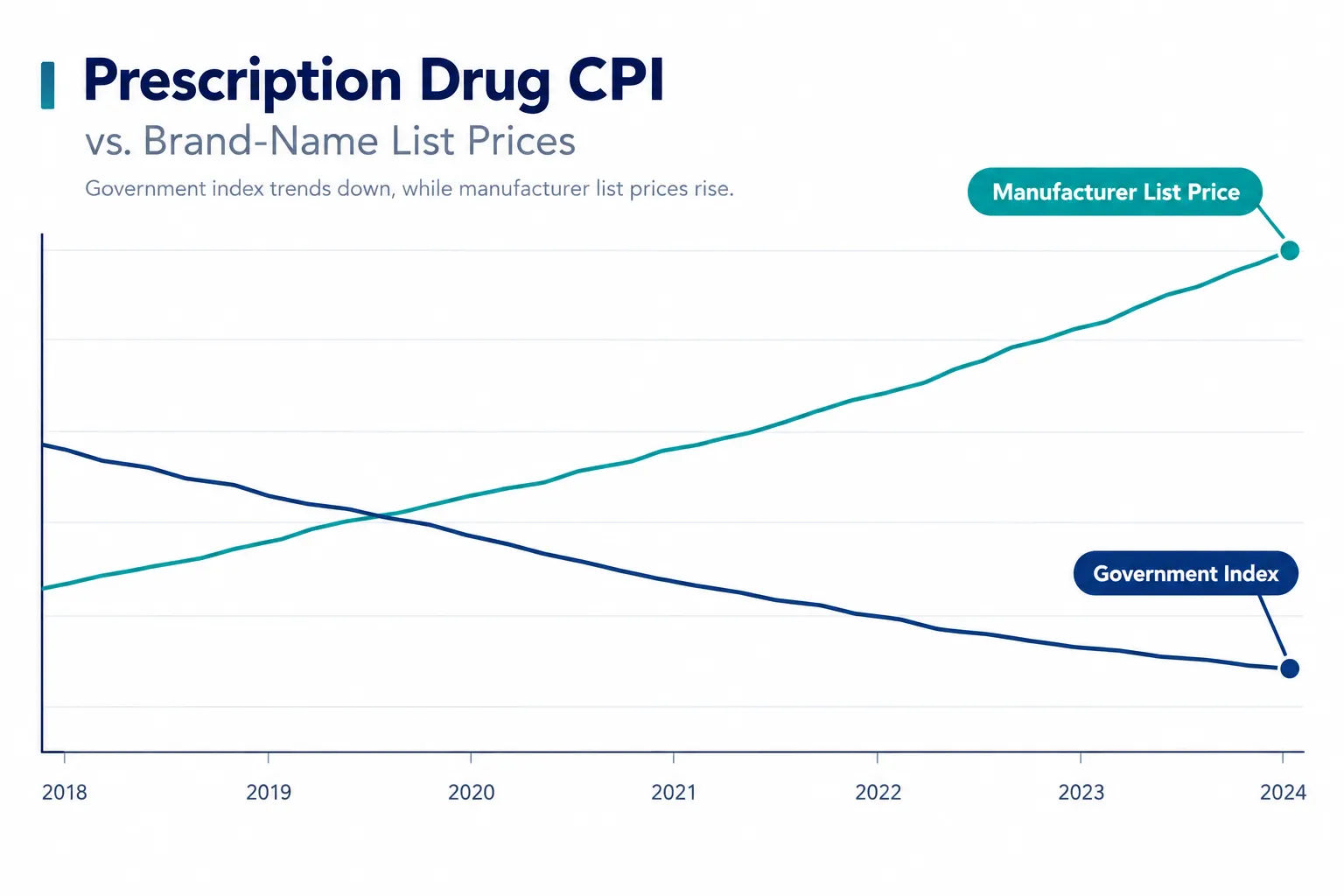
Drug prices have changed unevenly: some government price indexes show a modest recent decline, while list prices for most brand-name drugs have continued an upward trend that predates this administration [1]. There is no single number that captures “the” change in drug prices, because different drugs, payers, and pricing stages moved in different directions.
Key patterns worth understanding:
- Index-level prices (used for inflation tracking) can decline even when individual drug list prices rise, because the index reflects a weighted mix of products.
- Generic drug prices have generally stayed flat or fallen for years, a trend that predates recent policy announcements.
- Brand-name specialty drugs, including newer obesity and diabetes treatments, have seen some negotiated discounts under recent programs, but manufacturer list prices for many of these drugs remain high [7].
If you’re trying to judge “how much drug prices changed,” ask which drug category and which stage of pricing is being measured before accepting a single headline figure.
What’s the Difference Between List Price and Actual Drug Prices
List price is the price a drug manufacturer sets before any rebates, discounts, or insurance negotiations are applied; actual price (sometimes called net price) is what gets paid after those adjustments. This distinction explains why a drug can have a rising list price and a falling net price at the same time [1].
A simple breakdown:
- List price: the sticker price, often used in press releases and political statements because it is a single clean number.
- Net price: what manufacturers actually receive after rebates to insurers and pharmacy benefit managers.
- Out-of-pocket price: what the patient pays at the pharmacy counter, which depends on insurance design and can differ sharply from both list and net price.
Decision rule: if a drug price claim only mentions “list price,” treat it as incomplete. Ask whether net price or patient out-of-pocket cost moved in the same direction, because they often do not [1].
Why Are Drug Prices So High in the US
U.S. drug prices are high largely because the market lacks a single national negotiator, patent protections run long, and the rebate system between manufacturers, insurers, and pharmacy benefit managers adds complexity that obscures true costs. This structure is one reason drug pricing in the United States has been a politically charged issue across multiple administrations.
Contributing factors include:
- Patent exclusivity that delays generic competition for new brand-name drugs.
- A fragmented payer system, where thousands of insurers and employers negotiate separately instead of one national buyer.
- Rebate structures that let manufacturers set high list prices while quietly discounting net prices to specific payers.
- Limited price transparency at the point of sale, which makes it hard for patients to compare costs before filling a prescription.
Readers researching chronic conditions, including those exploring women’s health or men’s health topics tied to long-term prescriptions, often run into this pricing complexity directly when comparing pharmacy costs.
What Policies Actually Affect Drug Pricing
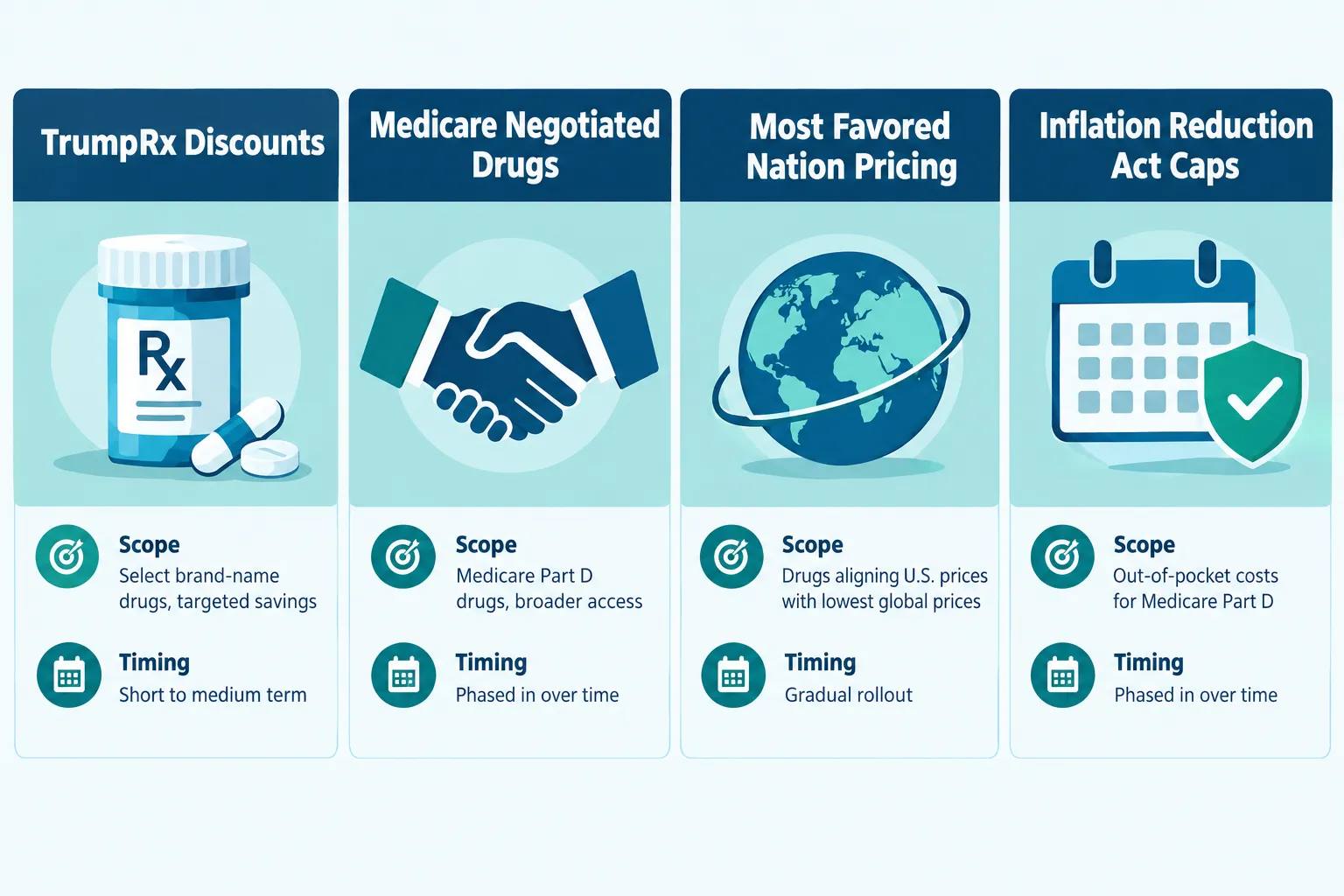
The policies with the most documented effect on drug pricing include Medicare’s drug price negotiation program, Most Favored Nation pricing proposals, and direct-to-consumer discount programs like TrumpRx; each has a defined but limited scope rather than an economy-wide effect. Understanding what each policy actually does, versus how it gets described, is central to fact-checking Trump’s claim about drug prices and what the data shows.

- Medicare drug price negotiation: applies to a specific list of high-spending drugs, with savings phasing in over time rather than all at once [10].
- Most Favored Nation (MFN) pricing: ties U.S. prices to lower prices paid in other wealthy countries for select drugs, with large projected numbers but uncertain real-world impact until enforcement details are set [5].
- TrumpRx: a direct-purchase platform announced to offer discounts, including on generics, with real but limited reach so far [2][3].
- Medicaid-related proposals: expanded pricing rules that carry big potential savings on paper, but actual impact depends on state-level implementation [5].
Common mistake: assuming a policy announcement equals a completed, fully effective program. Several of these initiatives were announced before full implementation details, pricing lists, or enforcement mechanisms were finalized [4][8][9].
Did the Inflation Reduction Act Lower Drug Prices and How Do They Compare to Other Countries
The Inflation Reduction Act (IRA) created the legal framework for Medicare to negotiate prices on select high-cost drugs and capped some patient costs, and this framework is the basis for negotiated prices now being implemented and sometimes credited to later announcements [10]. Separately, U.S. drug prices remain higher than in most peer countries for many brand-name drugs, which is part of why Most Favored Nation pricing proposals specifically reference international price comparisons [5].
Important nuances:
- The IRA passed before this administration’s term, but some of its negotiated price effective dates and rollout phases overlap with current announcements, which can blur credit in political statements.
- International price comparisons used in MFN proposals typically compare U.S. list or net prices to prices in a basket of other high-income countries, not a single country.
- Edge case: a drug can show a lower U.S. price than before while still costing more than the same drug in comparable countries, so “lower” and “comparable” are not the same claim.
What’s Misleading About Drug Price Statistics
Drug price statistics become misleading when a statement blends list price, net price, index averages, or single-drug examples without specifying which one is being used, or when a short-term discount program is described as a permanent, universal change. This is the core issue fact-checkers flag repeatedly when reviewing Trump’s drug pricing statements [1][3].
Watch for these specific patterns:
- Cherry-picked examples: citing one or two dramatically discounted drugs as if they represent the whole market.
- Timeframe mismatches: comparing a current discounted price to a price from years earlier without noting other market changes in between.
- Scope inflation: describing a program that covers a handful of drugs as if it applies to “all” or “most” prescriptions.
- Source blending: mixing a manufacturer’s own press release numbers with independent federal data without distinguishing them.
Quick example: a White House announcement might state a drug’s price fell due to a new deal, while an independent fact-check shows the discount applies to a specific patient group or purchasing channel, not the general retail price [3].
“Experts say crediting the full price decline to any single administration’s actions is more complicated than the public statements suggest.” [1]
How Can You Tell If Drug Price Claims Are Accurate
You can check accuracy by identifying the exact price type referenced, confirming the source behind the number, and checking whether independent fact-checkers or government data support the same figure. This simple habit works for any political drug pricing claim, not just statements from this administration.
A quick checklist:
- Identify the price type, list, net, or out-of-pocket.
- Check the scope, one drug, a drug class, or the whole market.
- Confirm the timeframe, compared to last year, last decade, or a specific baseline.
- Cross-reference a fact-checker, sites like FactCheck.org regularly review these exact claims [1][3][6].
- Look for official documentation, White House fact sheets and archived presidential statements show the original wording before media summarized it [2][4][5][8][9].
Choose this approach if you want a fast, repeatable way to evaluate any drug pricing headline, political or otherwise, before sharing it further.
Conclusion
Fact-checking Trump’s claim about drug prices shows real, documented policy activity alongside rhetoric that overstates its reach. A modest decline in a broad price index is genuine, targeted programs like Medicare negotiation and TrumpRx produced real discounts for specific drugs, and list prices for most brand-name medications kept climbing through the same period [1][7]. The honest summary, according to independent fact-checkers, is targeted progress rather than a sweeping transformation of the drug market [1][3].
If you want to evaluate the next headline about drug prices yourself, start by asking which price type is being cited, check the original White House or government source against an independent fact-check, and look at whether the claim applies to one drug or the whole market. For general health and wellness context while you manage prescription costs, our wellness and weight loss resources cover related medication and lifestyle topics, and the Health Trust MD home page has more guides on navigating health decisions with current, verified information.
FAQ
What did Trump actually claim about drug prices? Trump claimed broad, dramatic reductions in drug prices and described deals meant to bring U.S. prices in line with or below those in other countries, statements made in White House fact sheets and public remarks through 2025 and 2026 [2][6].
Are drug prices actually lower now? A government price index for prescription drugs has declined modestly, but this does not mean most individual drug prices fell by the large percentages often cited in speeches [1].
Did Medicare drug price negotiation lower costs for seniors? Medicare’s negotiated prices apply to a specific list of drugs and are being phased in over time, so not all seniors feel savings immediately [10].
What is TrumpRx and does it really lower prices? TrumpRx is a direct-purchase program that offers real discounts on select drugs, including some generics, but its reach is narrower than “lowest prices in the world” claims suggest [2][3][7].
Why do list prices keep rising if drug prices are supposedly falling? List prices are set by manufacturers before rebates and discounts; net and out-of-pocket prices can fall even while list prices climb, which is why the two numbers often move in opposite directions [1].
Which fact-checking organization has reviewed these claims most closely? FactCheck.org has published multiple detailed reviews, including analyses specifically addressing drug pricing deal claims and State of the Union statements [1][3][6].
Did the Inflation Reduction Act play a role in current drug price changes? Yes, the IRA created the legal basis for Medicare drug price negotiation, and some of its implementation timelines overlap with recent announcements, which can make credit-sharing confusing [10].
How do U.S. drug prices compare internationally? U.S. prices remain higher than in many peer countries for numerous brand-name drugs, which is the rationale behind Most Favored Nation pricing proposals tying U.S. prices to international benchmarks [5].
References
[1] Trump Claims Credit For Drug Price Decline Experts Say Its More Complicated – https://www.factcheck.org/2026/08/trump-claims-credit-for-drug-price-decline-experts-say-its-more-complicated/ [2] Fact Sheet President Donald J Trump Announces Actions To Lower Prescription Drug Prices – https://www.whitehouse.gov/fact-sheets/2025/04/fact-sheet-president-donald-j-trump-announces-actions-to-lower-prescription-drug-prices/ [3] Trump Misleads On Drug Pricing Deals – https://www.factcheck.org/2026/02/trump-misleads-on-drug-pricing-deals/ [4] Dcpd 202600568 – https://www.govinfo.gov/content/pkg/DCPD-202600568/pdf/DCPD-202600568.pdf [5] Fact Sheet President Donald J Trump Announces Major Developments In Bringing Most Favored Nation Pricing To American Patients – https://www.whitehouse.gov/fact-sheets/2025/11/fact-sheet-president-donald-j-trump-announces-major-developments-in-bringing-most-favored-nation-pricing-to-american-patients/ [6] Factchecking Trumps State Of The Union Address – https://www.factcheck.org/2026/02/factchecking-trumps-state-of-the-union-address/ [7] Medicare Drug Prices Negotiation Trump Ozempic Wegovy – https://apnews.com/article/medicare-drug-prices-negotiation-trump-ozempic-wegovy-53602fe0b5b7800030c475c3a5f34c3c [8] Dcpd 202600346 – https://www.govinfo.gov/content/pkg/DCPD-202600346/pdf/DCPD-202600346.pdf [9] Dcpd 202600083 – https://www.govinfo.gov/content/pkg/DCPD-202600083/pdf/DCPD-202600083.pdf [10] Wyden Statement On Trump Announcement Of Medicare Negotiated Drug Prices – https://www.finance.senate.gov/ranking-members-news/wyden-statement-on-trump-announcement-of-medicare-negotiated-drug-prices