Trump Prescription Savings Guide: How to Get Coupons and Pharmacy Discounts
Last updated: October 16, 2026
Quick Answer
The Trump Prescription Savings Guide approach to lowering drug costs combines federal policy changes, like Most Favored Nation pricing and direct-to-consumer purchasing programs, with everyday tools such as discount cards, manufacturer coupons, and pharmacy price comparisons. You do not need insurance to use most of these tools, and many are free. The fastest savings usually come from comparing prices across pharmacies before you fill a prescription, not from waiting on policy changes alone.
Key Takeaways
- Prescription discount cards like GoodRx and SingleCare are free and work at most major pharmacy chains, often beating insurance copays for generic drugs.
- Federal Most Favored Nation pricing policy aims to tie certain U.S. drug prices to lower prices paid in other wealthy countries, but rollout varies by drug and manufacturer.
- Manufacturer copay coupons can cut brand-name drug costs significantly but usually exclude people on Medicare or Medicaid.
- Comparing prices at three or more pharmacies before filling a prescription can reveal large price gaps for the exact same medication.
- Patient assistance programs run by drug makers offer free or low-cost medication for people who meet income requirements, regardless of insurance status.
- Asking your doctor about generic alternatives is one of the simplest ways to cut costs immediately, often by more than half.
- Mail-order and 90-day-supply pharmacy options frequently cost less per dose than monthly refills at a retail counter.
What Is the Trump Prescription Savings Guide and Why It Matters Now
The Trump Prescription Savings Guide refers to the combined set of federal drug pricing policies pursued during the Trump administration alongside the private-market coupon and discount tools that have existed for years. Together, they give patients several practical paths to pay less for medication, whether through government action or simple comparison shopping.
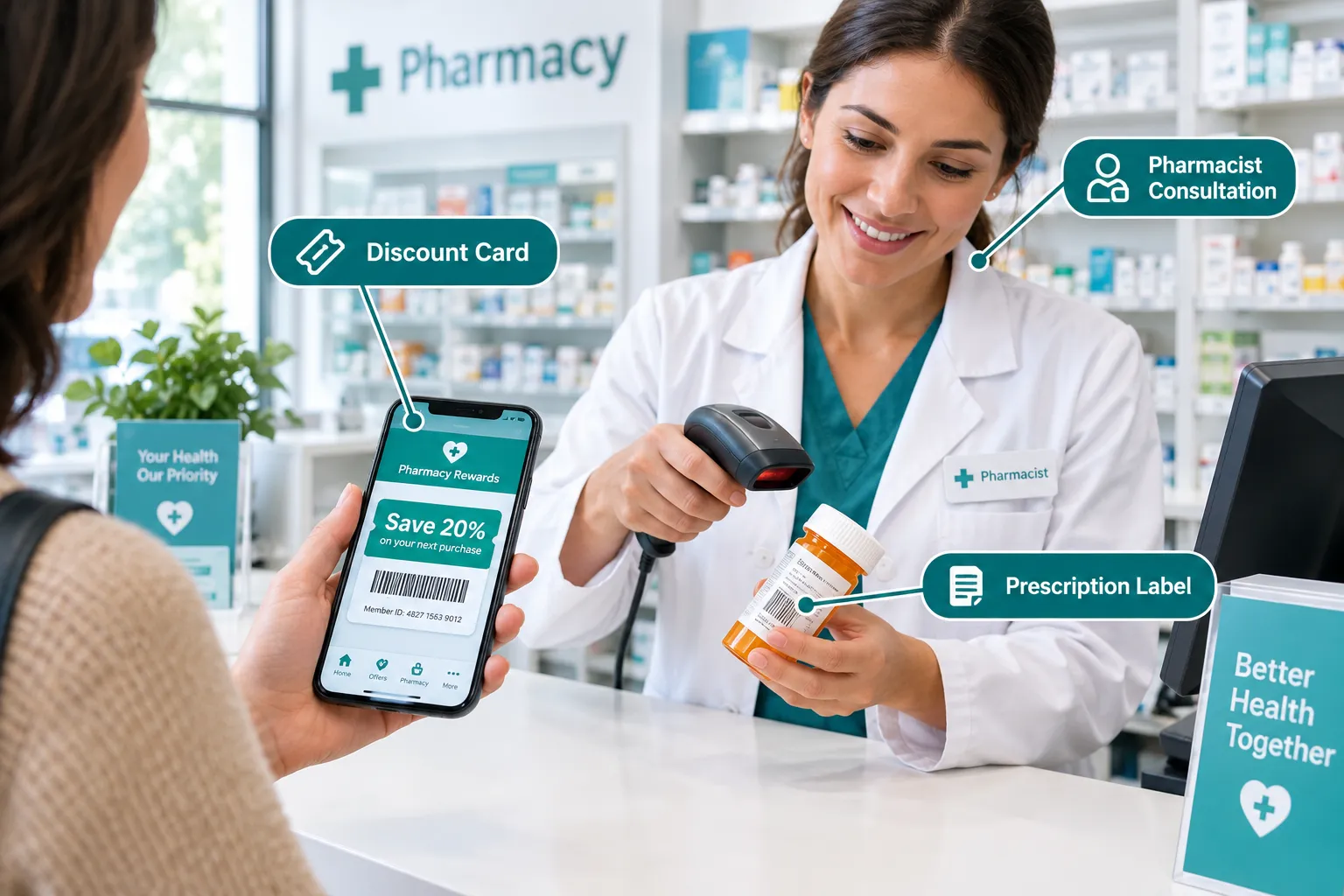
The policy side centers on efforts to lower what Americans pay compared to other countries. The administration has pushed pharmaceutical manufacturers toward Most Favored Nation pricing, which ties certain U.S. drug prices closer to the lower prices charged in other developed nations. There has also been public discussion of a direct-to-consumer purchasing platform intended to let patients buy some brand-name drugs straight from manufacturers at reduced prices, bypassing traditional insurance markups.
Here is the practical reality: these federal efforts affect a limited list of drugs and roll out gradually, deal by deal, manufacturer by manufacturer. They are not a substitute for the coupon and discount tools available to you right now. Use both. Check whether a federal pricing deal applies to your specific medication, and separately shop for discount cards and coupons that work immediately at your local pharmacy.
Choose this approach if: you take any regular prescription, have no insurance, have a high-deductible plan, or simply suspect you are overpaying. This is less relevant if: you already pay a flat low copay through insurance that beats every discount card price, which happens occasionally with preferred generics.
How Does the Most Favored Nation Drug Pricing Policy Affect Your Prescriptions
Most Favored Nation pricing policy aims to lower what certain drugs cost in the U.S. by linking prices to the lower rates paid in comparable wealthy countries, but it applies unevenly across medications and takes time to reach pharmacy shelves. Patients should not assume a drug is automatically cheaper because of this policy without checking.
A few things matter here:
- The policy has moved forward through negotiated agreements and executive action rather than one single nationwide price cut applied to every drug at once.
- Brand-name and specialty drugs, especially expensive ones with no generic competition, are the primary targets of these pricing talks.
- Generic medications, which already make up the large majority of prescriptions filled in the U.S., are generally not the focus of these negotiations because they are already low cost.
- Rollout speed depends on each manufacturer’s agreement with the federal government, so one drug may see lower prices well before another in the same category.
Common mistake: assuming a news headline about a drug pricing deal means your specific prescription is instantly cheaper at the counter. Always verify with your pharmacist or the drug manufacturer’s own pricing page before expecting a change.
Quick example: a patient on a costly brand-name diabetes medication might see pricing changes reach their pharmacy before someone taking a brand-name arthritis drug, simply because the manufacturers finalized agreements on different timelines. If your drug is not yet affected, the coupon and discount strategies below still apply today.
How to Get Prescription Discount Cards and Coupons Today
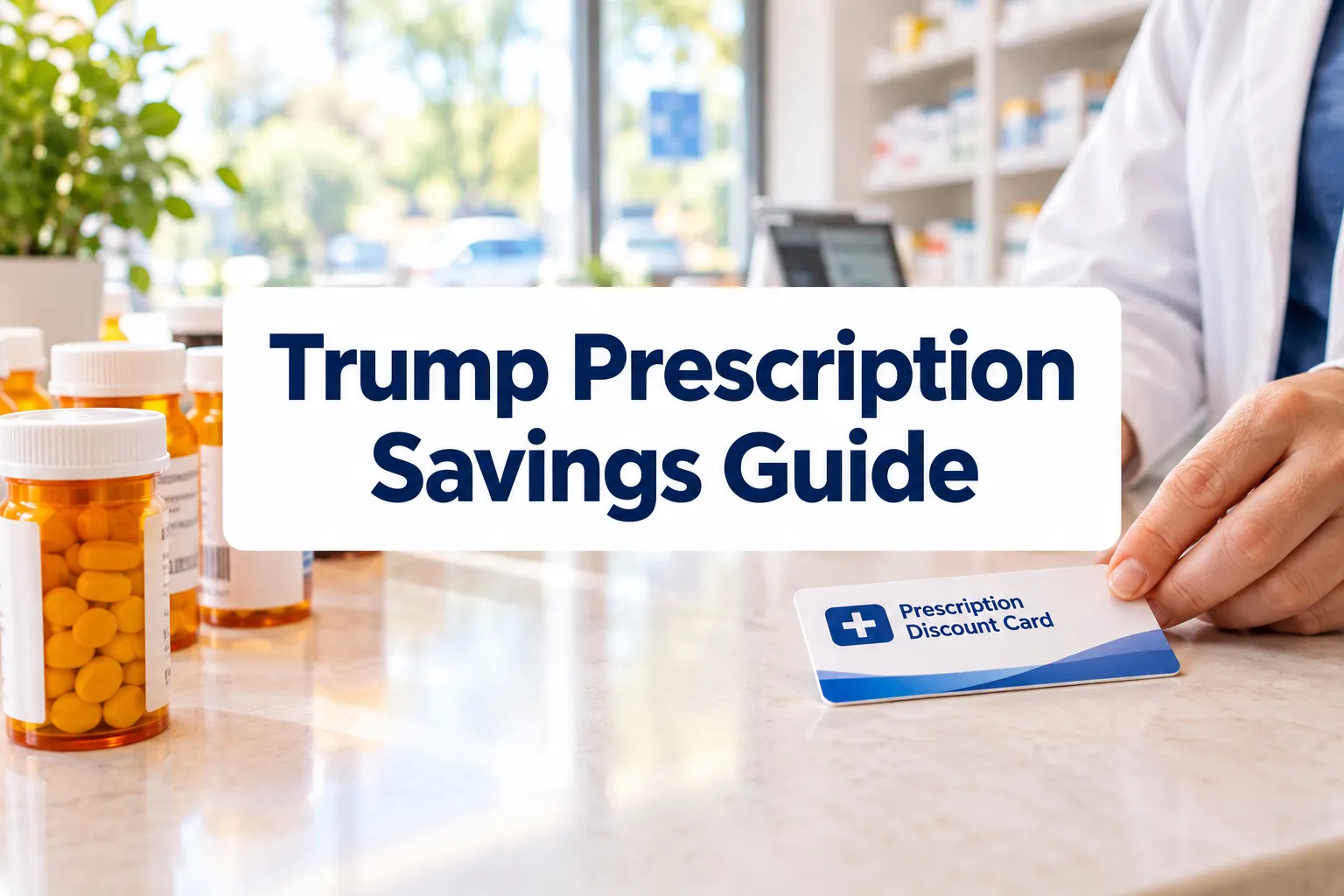
You can get a prescription discount card for free in under five minutes by signing up on a discount provider’s website or app, then showing the card or its code to your pharmacist before paying. No insurance enrollment or medical exam is required.
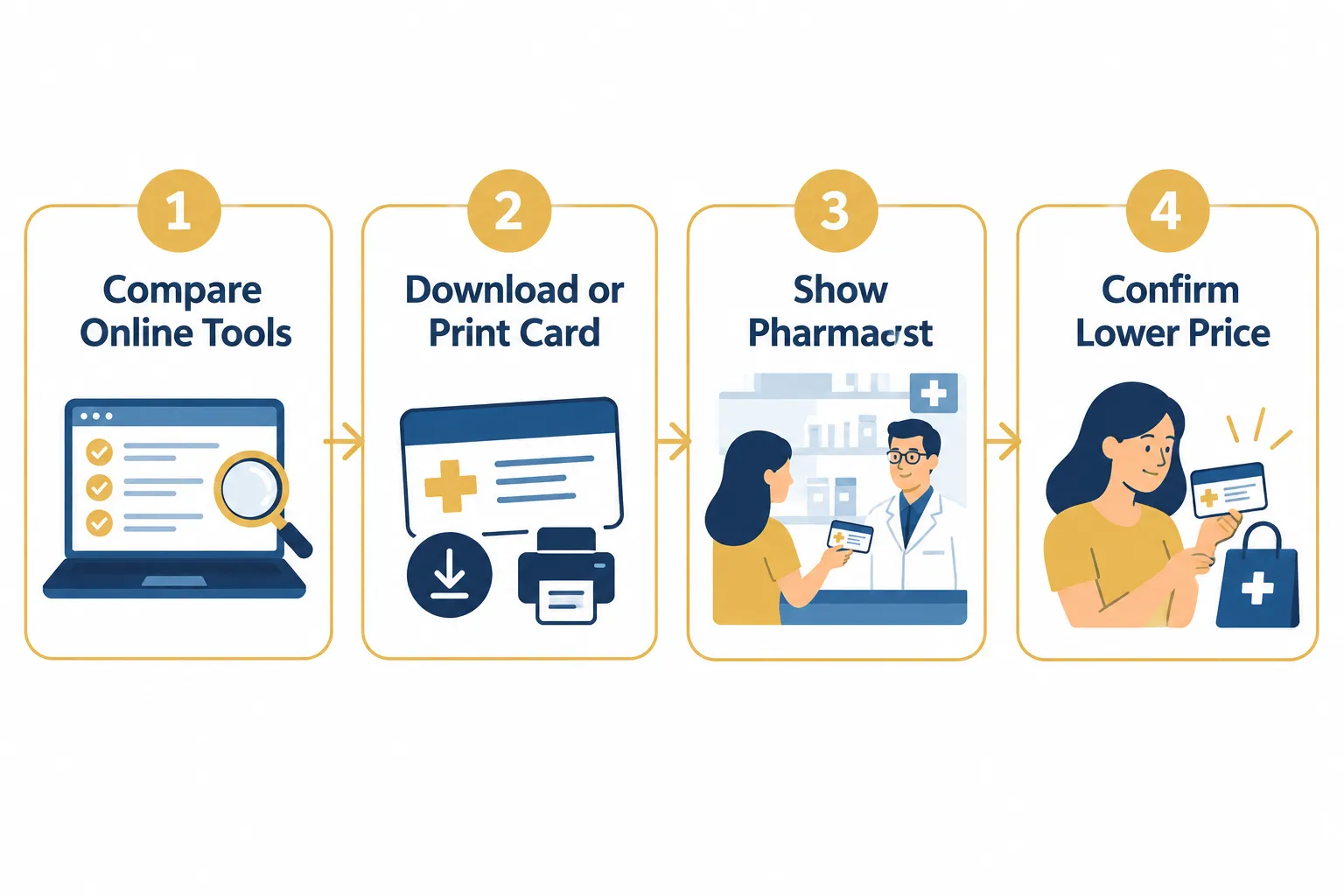
Here is the step-by-step process:
- Pick a discount tool. Options include GoodRx, SingleCare, Optum Perks, and store-specific programs at chains like Walmart or Kroger.
- Search your specific drug and dosage. Prices vary by strength and quantity, so enter the exact prescription your doctor wrote.
- Compare the price shown against your insurance copay. Sometimes the discount card beats your copay, especially for generics.
- Download the card or screenshot the coupon code. You do not need to print anything if your pharmacy can scan a phone screen.
- Hand it to the pharmacist before they process payment. Telling them “please check this discount price” before they run your insurance matters, because running insurance first can sometimes lock in a higher price.
- Ask if a 90-day supply lowers the per-dose cost further. Many discount programs offer better rates for larger fill quantities.
Choose a discount card if: you are uninsured, your deductible has not been met, or your drug is a common generic. Skip the card and use insurance if: your plan copay is already lower than every discount price you find, which your pharmacist can usually tell you on the spot.
For people managing broader health goals alongside medication costs, resources on wellness strategies can help you understand how diet, activity, and preventive care sometimes reduce the number of prescriptions you need long term.
Pharmacy Comparison: Where to Find the Lowest Prices
Prices for the exact same medication, same dose, same quantity, can differ by a wide margin between pharmacies in the same city. Independent pharmacies, big-box retailers, and chain drugstores all set cash prices differently, so comparison shopping is one of the highest-value habits you can build.
Here is a general comparison of common savings channels:
| Savings Channel | Who It Works Best For | What to Watch For |
|---|---|---|
| Discount cards (GoodRx, SingleCare) | Uninsured or high-deductible patients on generics | Cannot combine with insurance on the same fill |
| Manufacturer coupons | Insured patients on brand-name drugs | Usually blocked for Medicare and Medicaid enrollees |
| Patient assistance programs | Low-income patients, insured or not | Requires income documentation and annual renewal |
| Mail-order/90-day supply | Anyone on a stable, long-term medication | Less useful for short-term or as-needed prescriptions |
| Store-brand discount clubs | Frequent generic users at one retailer | Savings often limited to that single chain |
Decision rule: if your drug is generic and you are uninsured, start with a discount card. If your drug is brand-name and you have commercial insurance, start with a manufacturer coupon. If you have no insurance and low income, check a patient assistance program before anything else.
Edge case: some rural areas only have one pharmacy within a reasonable drive. In that situation, call ahead and ask the pharmacist directly whether they accept any discount card, since not every independent pharmacy participates in every program.
Manufacturer Coupons vs Patient Assistance Programs: What’s the Difference
Manufacturer coupons reduce your copay on a specific brand-name drug if you have commercial insurance, while patient assistance programs provide free or deeply discounted medication based on income, regardless of insurance status. These are two separate tools that serve different financial situations.
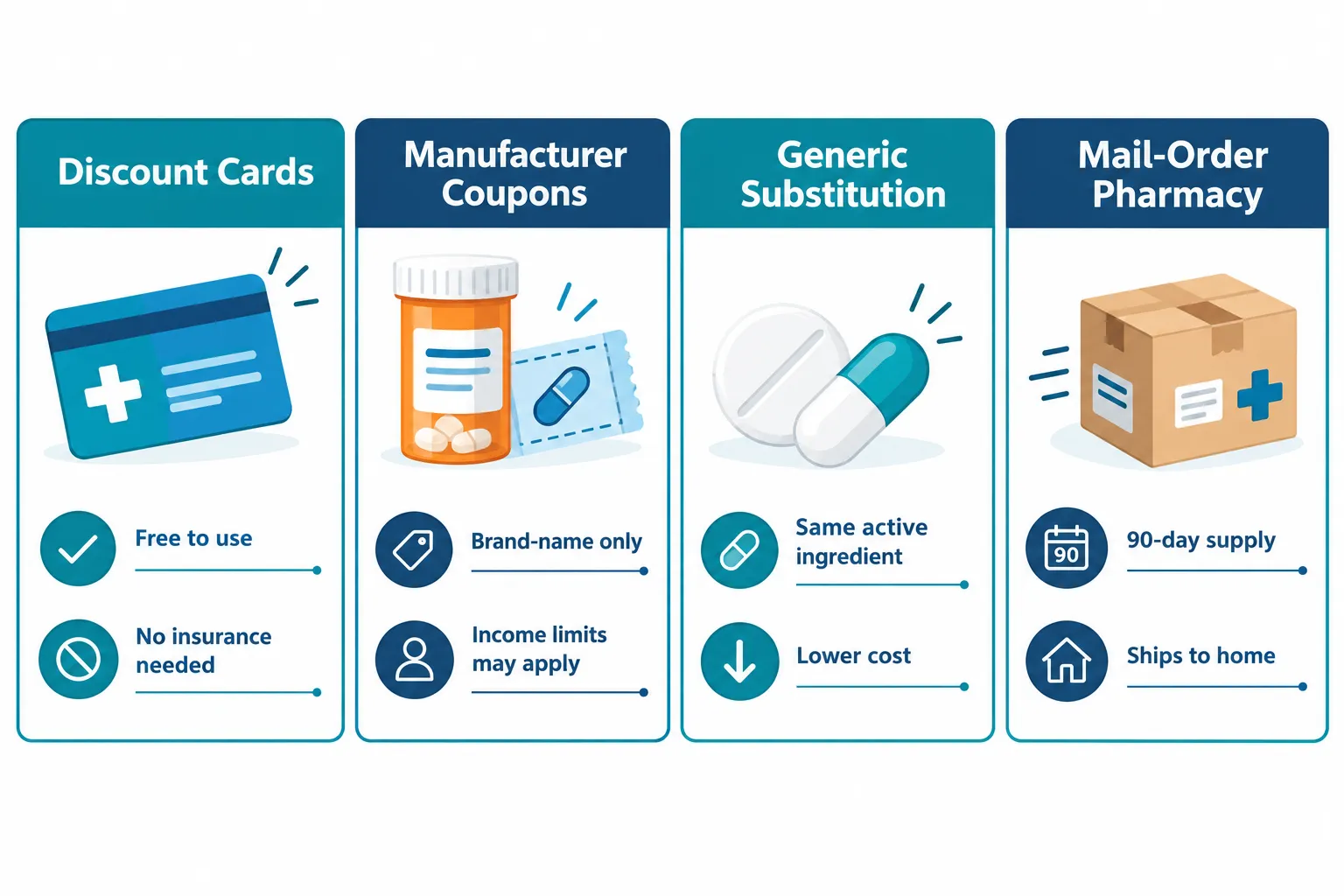
Manufacturer copay coupons:
- Found on the drug maker’s official website or handed out by your doctor’s office.
- Typically cut a brand-name copay to a small flat fee for a set period, often one year.
- Almost always excluded for anyone enrolled in Medicare, Medicaid, or other government insurance, due to federal anti-kickback rules.
- Best for working-age adults with employer or marketplace insurance taking an expensive brand-name drug.
Patient assistance programs:
- Run directly by pharmaceutical companies or nonprofit foundations.
- Require proof of income, usually under a set percentage of the federal poverty level.
- Can provide a full year of free medication for qualifying applicants, insured or not.
- Application and approval can take several weeks, so apply before you run out of your current supply.
Common mistake: assuming you automatically qualify for a patient assistance program because you are low income. Most programs require a completed application with pay stubs or tax documents, and approval is not automatic or instant.
If chronic conditions are part of your situation, our guides on men’s health and women’s health cover condition-specific context that can help you have a more informed conversation with your doctor about whether a lower-cost alternative drug exists.
Common Mistakes People Make When Searching for Prescription Savings
The biggest mistake is running your insurance first and only asking about discounts afterward, because many pharmacy systems lock in whichever price processes first. Asking about discount pricing before your insurance is billed gives you more flexibility to choose the cheaper option.
Other frequent errors include:
- Not asking for the generic version. Doctors sometimes write brand-name prescriptions out of habit; asking “is there a generic equivalent” can cut costs immediately.
- Using only one discount app. Prices vary between GoodRx, SingleCare, and others for the same drug at the same pharmacy, so checking two tools takes thirty extra seconds and can save real money.
- Forgetting to re-check prices at refill time. Pharmacy cash prices change monthly, so a coupon that saved money three months ago might not be the best option today.
- Ignoring 340B-affiliated clinics. Some community health centers and hospital-affiliated clinics have access to steeply discounted drug pricing programs that are separate from retail discount cards.
- Letting a coupon expire unnoticed. Manufacturer coupons often run for 12 months and then quietly stop working, leaving patients confused when a price jumps at refill time.
Quick example: a patient filling a cholesterol medication saved money for months using a manufacturer coupon, then saw the price triple at the twelve-month mark without realizing the coupon had expired. A quick check with the pharmacist or a switch to a discount card at that point would have avoided the surprise.
Step-by-Step Checklist for Maximizing Your Prescription Savings
Use this checklist every time you fill a new prescription or refill an existing one.
- Ask your doctor if a generic or therapeutic alternative exists.
- Check two or more discount card apps for your exact drug, dose, and quantity.
- Search the manufacturer’s website for a copay coupon if the drug is brand-name and you have commercial insurance.
- If uninsured or low income, look up the manufacturer’s patient assistance program before filling.
- Call two nearby pharmacies to compare cash prices, including at least one big-box retailer.
- Ask your pharmacist directly: “what is the lowest price you can charge me today.”
- Consider a 90-day mail-order fill for stable, long-term medications.
- Set a reminder to recheck pricing every three to six months, since discount rates and coupon terms change.
Readers managing weight-related prescriptions may also find it useful to review broader strategies in our weight loss resource hub, since lifestyle changes sometimes reduce dosage needs over time and lower total medication spending.
Frequently Asked Questions
Does the Trump Prescription Savings Guide require signing up for a government program?
No. Most of the savings tools described here, including discount cards, coupons, and pharmacy comparisons, are private-market tools you can use immediately without any government enrollment.
Can I use a discount card together with my insurance?
Generally no. Pharmacies process a prescription either through insurance or through a discount card, not both at once, so you need to tell the pharmacist which option to use before they run the transaction.
Will Most Favored Nation pricing lower every drug I take?
Not automatically. The policy applies to specific drugs through negotiated agreements with manufacturers, so some medications see price changes sooner than others, and some may not be affected at all yet.
Are manufacturer coupons available if I have Medicare?
Usually not. Federal rules generally block manufacturer copay coupons for Medicare and Medicaid enrollees, so patients on those programs should focus on patient assistance programs and discount cards instead.
How much can a discount card actually save on a generic drug?
Savings vary widely by drug, dose, and pharmacy, so there is no single fixed percentage. The only reliable way to know is to check the discount tool’s listed price for your exact prescription against your current copay.
What is the fastest way to lower a prescription cost today?
Ask your pharmacist directly what the lowest cash price is, and ask your doctor whether a generic version exists. These two questions often produce savings faster than any app or policy change.
Do patient assistance programs cover over-the-counter medications?
No. These programs are built for prescription medications, typically brand-name drugs without a generic alternative, and almost never cover over-the-counter products.
Conclusion
Lowering your prescription costs does not require waiting on federal policy to fully roll out. Start with what you can control today: ask your doctor about generics, compare two or three discount cards for your exact medication, and call around to a few pharmacies before you fill. Layer in manufacturer coupons or patient assistance programs if you qualify, and keep an eye on broader Most Favored Nation pricing developments since they may eventually lower costs on specific brand-name drugs you take.
My recommendation is simple: treat every refill as a chance to re-check pricing, because discount rates, coupon terms, and pharmacy cash prices shift often. Build that habit once, and it keeps paying off every month your prescription is active.