Understanding Donald Trump’s New Prescription Drug Policies & Price Changes
Last updated: October 17, 2026
Quick Answer
Understanding Donald Trump’s new prescription drug policies and price changes starts with one core mechanism: Most Favored Nation (MFN) pricing, which ties U.S. drug costs to the lower prices paid by other wealthy nations. Since early 2026, this approach has expanded from a handful of pilot deals into a direct-to-consumer pricing portal, a 50-state Medicaid rollout, and voluntary agreements covering roughly 90% of the branded U.S. drug market [6] [3]. The White House reports the steepest drop in prescription drug prices in more than six decades, though independent analysts and patients report mixed results depending on the drug and insurance plan involved [2] [5].
Key Takeaways
- Most Favored Nation (MFN) pricing is the backbone of the policy, pegging certain U.S. drug prices to the lowest price paid among comparable wealthy countries [8].
- TrumpRx.gov, launched in February 2026, lets consumers buy select medications directly at MFN-linked prices, bypassing some insurance markups [10].
- All 50 state Medicaid programs now use MFN pricing as of September 2026, extending savings beyond the initial pilot states [1] [6].
- Nine additional drugmakers signed voluntary pricing deals by August 31, 2026, pushing coverage to about 90% of the branded U.S. market [3] [9].
- The administration claims the largest prescription drug price drop in over 60 years, based on data through mid-2026 [2].
- Some individual high-cost drugs saw cuts of 50% to 90% or more, though these tend to be specific brand-name products rather than across-the-board reductions [2].
- Generic drugs, which already account for most U.S. prescriptions, are largely outside the MFN negotiation framework and continue to be priced through existing market competition.
- Independent reporting shows a gap between national pricing data and what many patients actually pay at the pharmacy counter, especially those with high-deductible plans [5].
- The long-term durability of these price cuts is debated among economists and health policy analysts, with questions about manufacturer pricing strategy and legal challenges ahead.
What Are Trump’s Prescription Drug Price Policies? Understanding Donald Trump’s New Prescription Drug Policies & Price Changes
Trump’s prescription drug price policies center on Most Favored Nation pricing, direct federal deals with drug manufacturers, and a government-run purchasing portal designed to cut out pricing middlemen. Together, these form the backbone of what the administration calls the Great Healthcare Plan, first unveiled in January 2026 [7].
The policy framework rests on three pillars:
- MFN pricing rules, which require that certain drugs sold in the U.S. not cost more than the lowest price charged in other developed countries [8].
- Voluntary manufacturer agreements, negotiated directly with pharmaceutical companies in exchange for regulatory and market incentives [9].
- TrumpRx.gov, a federal platform allowing consumers to purchase medications at negotiated rates without going through traditional insurance channels [10].
This is not a single law passed by Congress. Instead, it is a mix of executive actions, agency rulemaking, and company-by-company deals that started with initial actions in April 2025 and accelerated through 2026 [4]. If you take one thing from this section, it’s this: the policy works more like a series of negotiated settlements and rule changes than one unified statute, which matters for how durable the changes may turn out to be.
Decision rule: If you want to know whether a specific policy applies to you, check whether it targets Medicaid, Medicare, or direct-purchase consumers, the rules differ by program, and not every change touches every patient the same way.
When Did Trump’s Prescription Drug Policies Take Effect?
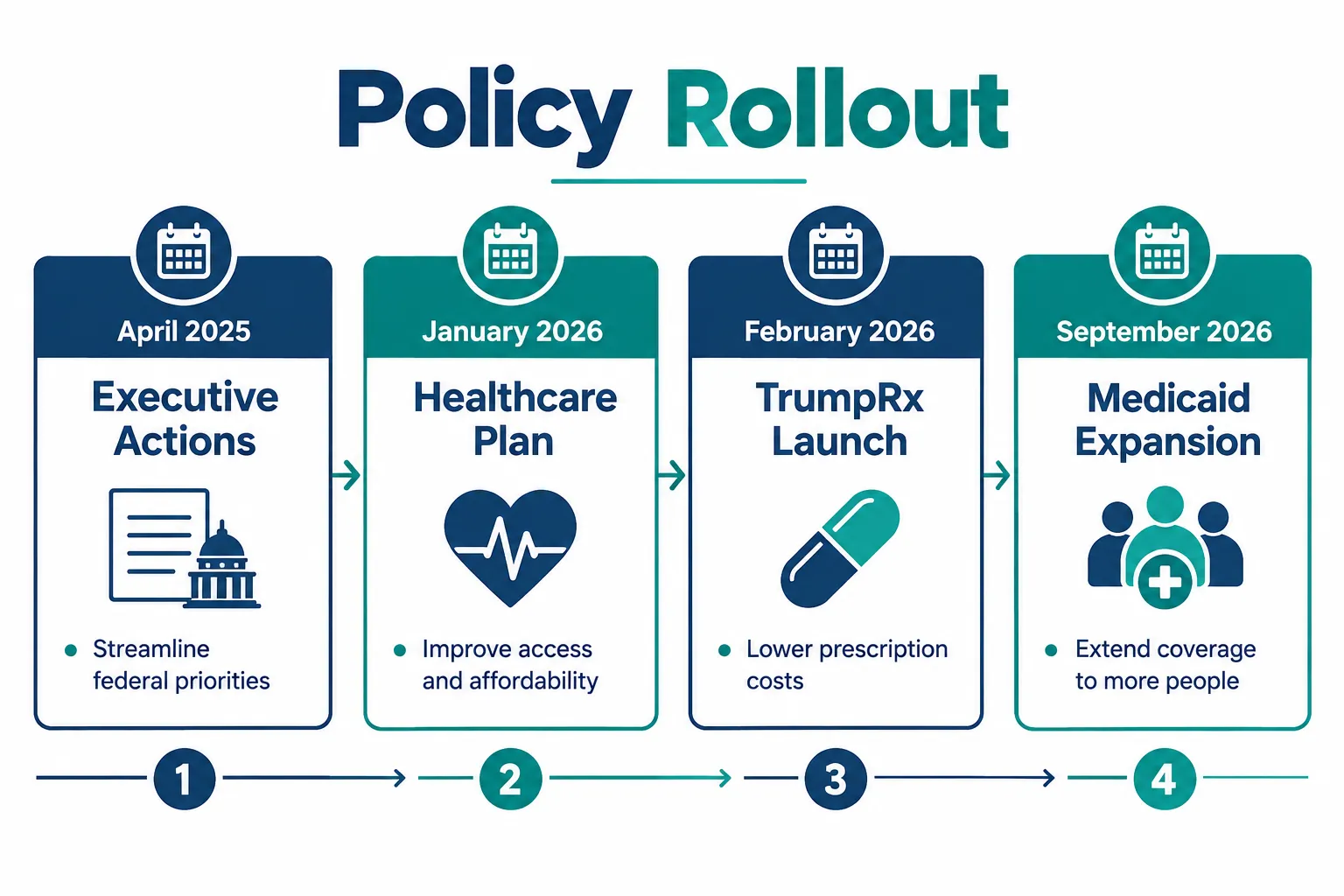
Trump’s prescription drug policies rolled out in stages starting in April 2025, with the most significant expansions occurring in 2026. There was no single “effective date”, each component launched separately as deals closed and rules finalized.
Here’s the rollout in order:
- April 2025: Initial executive actions directing agencies to pursue lower drug prices, including early MFN groundwork [4].
- January 2026: The Great Healthcare Plan announcement, framing drug pricing as part of a broader cost-reduction and consumer-rebate strategy [7].
- February 2026: TrumpRx.gov launches, giving consumers a direct purchasing channel for select drugs at MFN-linked prices [10].
- May through August 2026: Technical and research documents outline projected savings from the MFN framework, and the administration signs voluntary deals with nine additional midsized drugmakers by August 31, covering close to 90% of the branded market [8] [3] [9].
- September 2026: MFN pricing extends to every state Medicaid program in the country, not just the original pilot states [1] [6].
Common mistake: Assuming the entire policy became law at once. In reality, coverage still depends on which drug, which program (Medicaid, Medicare, or direct purchase), and which manufacturer signed on.
How Does Trump’s Drug Price Negotiation Policy Work?
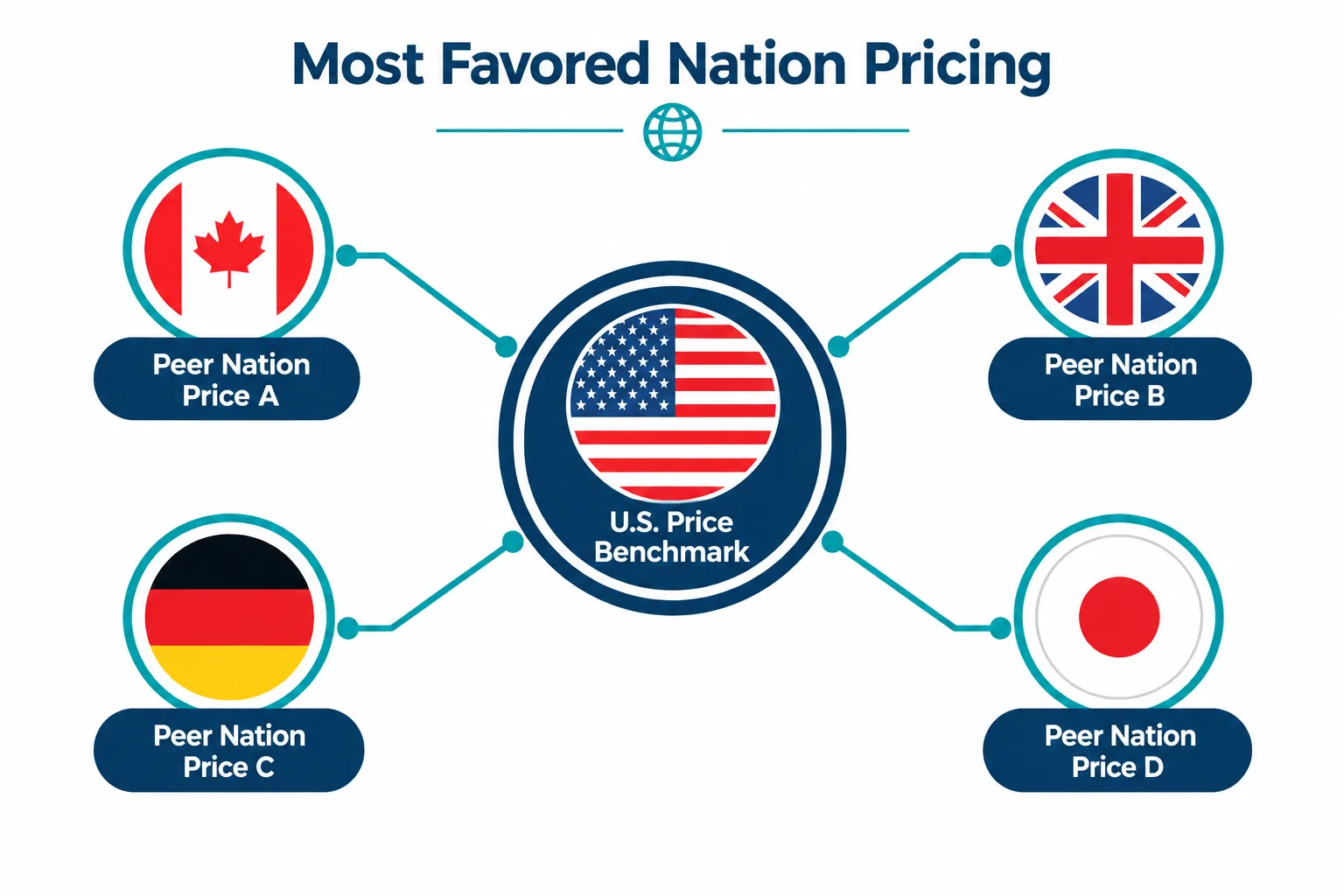
Trump’s drug price negotiation policy, built around the Most Favored Nation model, ties what the U.S. pays for certain drugs to the lowest price charged for the same drug in other wealthy countries. Instead of Medicare negotiating prices drug-by-drug through a lengthy bidding process, MFN sets a reference price benchmark.
Here’s how it functions in practice:
- The government identifies comparable high-income countries and tracks what they pay for a given brand-name drug.
- U.S. pricing for that drug under covered programs is capped at or near the lowest of those international prices.
- Manufacturers can either accept the benchmark price through a voluntary deal or face other regulatory pressure, which is why so many companies signed on through 2026 [9] [3].
- Savings estimates from internal policy documents project substantial federal and consumer savings once the framework is fully phased in [8].
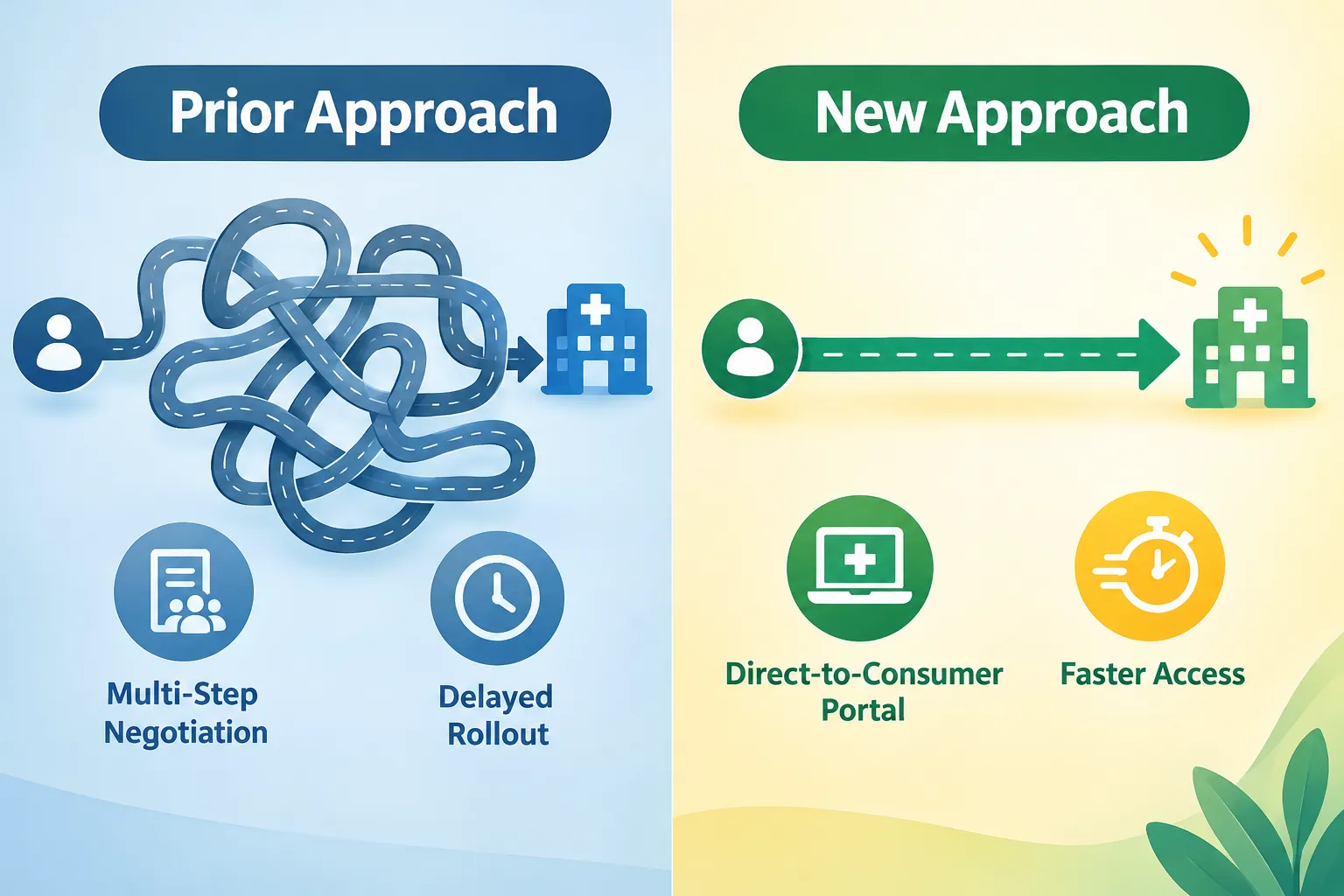
This differs from the Medicare drug price negotiation process created under prior law, which involved a formal, multi-year negotiation timeline for a limited list of high-spend drugs. MFN pricing instead uses international comparisons as the baseline and has moved faster because it relies heavily on voluntary manufacturer participation rather than a mandated negotiation calendar.
Edge case: A drug with no close international comparator (because it’s only sold in the U.S. or priced differently abroad) may not fit neatly into the MFN framework, which is one reason coverage isn’t universal across every medication.
How Do Trump’s Drug Policies Affect Medicare Prices and Seniors?
Trump’s drug policies affect Medicare primarily through MFN pricing rules that lower the benchmark cost for specific high-spend drugs, building on insulin and related reforms that predate the 2026 push. For seniors, the practical effect depends heavily on which drugs they take and how their Part D plan structures cost-sharing.
Key points for Medicare beneficiaries:
- Insulin and related cost caps set in 2025 remain part of the policy story and continue to apply alongside newer MFN rules [4].
- MFN-linked drugs used heavily by older adults, including some cardiovascular and diabetes medications, have seen list price reductions reported by the administration [2].
- Out-of-pocket savings vary by plan. A lower list price does not automatically mean a lower copay if a patient’s plan design places the drug in a higher cost-sharing tier.
- Reporting from October 2026 found many Medicare-age voters still experiencing a gap between the administration’s national pricing claims and what they personally pay at the pharmacy counter [5].
Does the policy lower costs for seniors? For some, yes, especially those taking MFN-covered brand-name drugs through Medicaid or TrumpRx.gov. For others on Medicare Advantage or Part D plans with complex tiering, savings can be smaller or delayed. If you or a family member manage chronic conditions, pairing medication reviews with broader wellness planning can help you track whether your actual costs are falling, not just the advertised list price.
How Much Will Prescription Drugs Cost Under Trump’s New Policies?
Prescription drug costs under Trump’s new policies vary widely by drug, with the administration reporting price cuts of 50% to 90% or more on select high-cost brand-name medications, while many other drugs saw smaller or no change. There is no single flat percentage that applies to every prescription.
What determines your actual price:
- Which drug you take. The steepest cuts apply to specific high-cost brand-name drugs targeted in manufacturer deals, not the entire drug market [2].
- Where you buy it. Prices through TrumpRx.gov or state Medicaid can differ substantially from prices run through private insurance or retail pharmacy without a negotiated rate [10].
- Which drugs are excluded. Many generics, some newer specialty drugs still under exclusive marketing rights, and drugs without a clear international price comparator fall outside the MFN framework.
- Your coverage type. Medicaid patients and direct TrumpRx.gov purchasers are more likely to see the advertised reductions than someone with employer-sponsored insurance and a high deductible.
Quick example: A senior on a state Medicaid plan taking an MFN-covered diabetes medication may see a dramatic list price drop reflected in their program’s costs. A working-age adult with employer insurance taking the same drug, but routed through a private pharmacy benefit manager, may see a much smaller change, because MFN rules don’t automatically override every private insurance contract.
Trump vs. Biden Prescription Drug Policies: A Side-by-Side Comparison
Trump’s prescription drug policies differ from the Biden administration’s approach mainly in mechanism and speed: Biden relied on a mandated, multi-year Medicare negotiation process for a short list of drugs, while Trump’s team uses MFN international price benchmarking paired with voluntary manufacturer deals rolled out across 2025 and 2026.
| Feature | Biden-Era Approach | Trump’s 2025-2026 Approach |
|---|---|---|
| Core mechanism | Medicare direct negotiation on a limited drug list | Most Favored Nation international price benchmarking [8] |
| Rollout speed | Multi-year phased negotiation calendar | Rapid deal-by-deal rollout through 2026 [3] |
| Consumer access point | Primarily through Medicare plan pricing | Added direct-to-consumer portal, TrumpRx.gov [10] |
| Medicaid scope | State-by-state variation | All 50 states under MFN as of Sept 2026 [1] [6] |
| Manufacturer participation | Mandated for listed drugs | Largely voluntary deals, ~90% branded market coverage [3] |
Choose this framing if you’re comparing policy effectiveness: Biden’s model guaranteed negotiation for a fixed set of drugs through a legal mandate. Trump’s model trades that legal certainty for speed, relying on voluntary deals that could, in theory, be renegotiated or walked back by future manufacturers or administrations.
How Are Pharmaceutical Companies Responding to Trump’s Drug Price Changes?
Pharmaceutical companies have largely responded to Trump’s drug price changes by signing voluntary MFN pricing agreements rather than fighting the policy through legal challenges, with nine additional midsized manufacturers joining by late August 2026 [9]. This brought total coverage to roughly 90% of the U.S. branded drug market [3].
Why companies are cooperating:
- Regulatory and market incentives attached to the deals make compliance more attractive than standing outside the framework.
- Avoiding reputational and political pressure tied to public pricing disputes during an election cycle.
- Maintaining access to Medicaid and federal purchasing programs, which represent significant revenue for many manufacturers.
That said, not every company has signed on, and some industry analysts caution that voluntary deals can be structured to protect a manufacturer’s highest-margin products while offering deeper discounts on drugs nearing patent expiration anyway. This is part of the ongoing debate over whether the price drops reflect genuine structural change or front-loaded concessions timed around the 2026 midterms [5].
Are Generic Drugs Affected by Trump’s Prescription Drug Policies?
Generic drugs are largely excluded from the core MFN negotiation framework because they already compete on price through existing market dynamics rather than international benchmarking. The policy’s headline price cuts mostly apply to brand-name and specialty drugs.
What this means in practice:
- If you take a generic statin, blood pressure medication, or antibiotic, your price is unlikely to shift because of MFN deals specifically, generic pricing was already driven by manufacturer competition before this policy existed.
- If you take a brand-name specialty drug with no generic equivalent yet, you’re far more likely to see a direct effect from MFN pricing or a manufacturer deal.
- Biosimilars (the near-equivalent of generics for biologic drugs) sit in a gray area and may see indirect effects as brand-name reference prices shift.
Common mistake: Assuming “prescription drug prices are dropping” applies evenly across your entire medicine cabinet. In most households, the drugs affected by headline cuts are the expensive brand-name ones, not the everyday generics that already make up the majority of prescriptions filled.
How to Get Cheaper Prescriptions Under the New Trump Policies
Getting cheaper prescriptions under the new Trump policies generally means checking TrumpRx.gov, confirming your state’s Medicaid MFN status, and asking your pharmacist or doctor whether your specific medication is part of a manufacturer pricing deal. There’s no universal discount code, eligibility depends on the drug and your coverage.
A practical checklist:
- Search your medication by name on TrumpRx.gov to see if it’s listed at an MFN-linked price [10].
- Call your state Medicaid office if you’re enrolled, since MFN pricing now applies in all 50 states as of September 2026 [1] [6].
- Ask your pharmacist directly whether your brand-name drug has a manufacturer discount program tied to the 2026 deals [9].
- Compare the direct-purchase price to your insurance copay, since in some cases paying cash through a negotiated program can beat your insurance tier price.
- Talk to your prescriber about therapeutic alternatives if your specific drug isn’t covered by any current deal but a similar one is.
How do you find out if your medication qualifies for price reductions? The most reliable method is checking the drug name directly on TrumpRx.gov or asking your pharmacy to run both the insurance price and the direct-purchase price side by side. For broader health planning alongside medication costs, resources on men’s health, women’s health, and weight loss can help you weigh treatment options, since some high-cost specialty drugs, including certain weight-management medications, have been part of recent pricing negotiations.
What Happens to Drug Prices After Full Implementation? Understanding Donald Trump’s New Prescription Drug Policies & Price Changes Going Forward
After full implementation, drug prices are likely to keep falling for MFN-covered brand-name drugs, but the durability of these cuts depends on continued manufacturer participation, legal challenges, and whether future administrations maintain the framework. Analysts remain split on how sustainable the current trend is.
Points shaping the road ahead:
- Legal and legislative uncertainty remains, since much of the policy rests on executive action and voluntary deals rather than a permanent statute.
- Manufacturer pricing strategy could shift again once patent cliffs, new drug launches, or renegotiated deals change the underlying economics.
- Patient-reported experience still lags national pricing claims in some cases, according to October 2026 election-season reporting on affordability [5].
- Future administrations could expand, narrow, or unwind parts of the framework, since much of it isn’t locked into law the way the original Medicare negotiation provisions were.
Edge case: If a manufacturer’s voluntary deal expires or isn’t renewed, a drug that was discounted in 2026 could see prices drift back upward without new legislation forcing continued compliance. That’s the central risk flagged by health policy analysts debating the long-term sustainability of these cuts.
Frequently Asked Questions
What is Most Favored Nation drug pricing? Most Favored Nation (MFN) pricing ties the U.S. price of a covered drug to the lowest price charged for that same drug in other comparable wealthy countries, rather than letting U.S. prices run independently higher [8].
When did Trump’s prescription drug policies start? The groundwork began with executive actions in April 2025, with major expansions including TrumpRx.gov in February 2026 and the all-state Medicaid MFN rollout in September 2026 [4] [10] [1].
Does this policy apply to all prescription drugs? No. It applies mainly to specific brand-name and specialty drugs included in MFN benchmarking or manufacturer deals. Most generic drugs are not directly affected.
How much have drug prices actually dropped? The administration reports cuts of 50% to 90% or more on select high-cost drugs, and claims the largest overall prescription drug price drop in more than 60 years based on mid-2026 data [2]. Actual savings vary by drug and coverage type.
Is this the same as Biden’s Medicare drug negotiation program? No. Biden’s program used a mandated negotiation process for a limited Medicare drug list. Trump’s approach uses MFN international price benchmarking paired with voluntary manufacturer agreements, rolling out faster but with less legal permanence.
Will my Medicare Part D premium change because of this? Not directly. MFN pricing targets drug costs, not plan premiums, though lower drug costs can indirectly influence plan pricing over time.
How do I know if my drug is covered by a price deal? Check TrumpRx.gov directly, ask your pharmacist, or contact your state Medicaid office, since coverage is drug-specific and state-specific [10] [6].
Are these price cuts permanent? That’s uncertain. Many rest on voluntary deals and executive action rather than permanent law, so future negotiations, legal rulings, or policy changes could alter them.
Conclusion
Understanding Donald Trump’s new prescription drug policies and price changes comes down to one practical reality: the savings are real for many high-cost brand-name drugs, but they are not universal, automatic, or guaranteed to last forever. MFN pricing, the TrumpRx.gov portal, and the 50-state Medicaid rollout have pushed down list prices on specific medications, and the administration backs that up with data showing the steepest drop in prescription costs in over six decades [2] [1]. At the same time, independent reporting shows plenty of patients haven’t felt that relief yet, particularly those on private insurance or taking drugs outside the MFN framework [5].
If you want to act on this information: check whether your specific medication appears on TrumpRx.gov, ask your pharmacist about manufacturer discount programs, and confirm your state’s Medicaid MFN status if you’re enrolled. Don’t assume a national headline about falling drug prices automatically applies to your prescription. For ongoing guidance on managing chronic conditions and medication costs as part of a bigger health picture, explore more on wellness strategies, or start from the Health Trust MD home page for additional resources.
References
[1] President Trump Extends Most Favored Nation Pricing To Every Medicaid Program In America – https://www.whitehouse.gov/releases/2026/09/president-trump-extends-most-favored-nation-pricing-to-every-medicaid-program-in-america/
[2] President Trump Delivers Largest Prescription Drug Price Drop In Over 60 Years – https://www.whitehouse.gov/releases/2026/08/president-trump-delivers-largest-prescription-drug-price-drop-in-over-60-years/
[3] Trump Drug Pricing Deals – https://www.cnbc.com/2026/08/31/trump-drug-pricing-deals.html
[4] Fact Sheet President Donald J Trump Announces Actions To Lower Prescription Drug Prices – https://www.whitehouse.gov/fact-sheets/2025/04/fact-sheet-president-donald-j-trump-announces-actions-to-lower-prescription-drug-prices/
[5] Midterms Election Trump Drug Prices Affordability – https://www.nytimes.com/2026/10/16/business/midterms-election-trump-drug-prices-affordability.html
[6] Fact Sheet President Donald J Trump Announces Lower Drug Prices For All 50 State Medicaid Programs – https://www.whitehouse.gov/fact-sheets/2026/09/fact-sheet-president-donald-j-trump-announces-lower-drug-prices-for-all-50-state-medicaid-programs/
[7] President Trump Unveils The Great Healthcare Plan To Lower Costs And Deliver Money Directly To The People – https://www.whitehouse.gov/releases/2026/01/president-trump-unveils-the-great-healthcare-plan-to-lower-costs-and-deliver-money-directly-to-the-people/
[8] Savings From Mfn Drug Pricing Policy – https://www.whitehouse.gov/wp-content/uploads/2026/05/Savings-from-MFN-Drug-Pricing-Policy.pdf
[9] Fact Sheet President Donald J Trump Announces Deal With Nine Additional Pharmaceutical Manufacturers To Lower Drug Prices For Americans – https://www.whitehouse.gov/fact-sheets/2026/08/fact-sheet-president-donald-j-trump-announces-deal-with-nine-additional-pharmaceutical-manufacturers-to-lower-drug-prices-for-americans/
[10] President Trump Launches Trumprx Gov Delivering Massive Immediate Savings To Millions Of Americans – https://www.whitehouse.gov/releases/2026/02/president-trump-launches-trumprx-gov-delivering-massive-immediate-savings-to-millions-of-americans/