TrumpRx Eliquis Price Breakdown: Out-of-Pocket Savings & Alternatives
Last updated: October 17, 2026
A patient who paid under $30 a month for Eliquis got a refill quote of more than $70 this year, even with the new TrumpRx discount program in place [8]. That single data point tells you more about the real cost of blood thinners in 2026 than any list-price headline. This TrumpRx Eliquis Price Breakdown looks at what the platform actually charges, where the out-of-pocket savings come from, and which alternatives, generic apixaban, manufacturer cards, Medicare negotiation, or Cost Plus Drugs, might save you more.
Quick Answer
TrumpRx lists Eliquis at roughly $346 for a 30-day cash-pay supply, about 43% below the U.S. list price, but this price only applies if you pay cash without using insurance [3][9]. Insured patients often do better with the manufacturer copay card (as low as $10 per fill) or Medicare Part D’s negotiated price of about $231, while uninsured low-income patients may qualify for free medication through Bristol Myers Squibb’s patient assistance program [2][9][10].
Key Takeaways
- TrumpRx prices Eliquis at about $346 per month for cash-paying customers, a 43% cut from list price, but it does not work with insurance [3][9].
- The Eliquis copay card can bring costs down to $10,$30 per fill for commercially insured patients, up to a $2,000 annual cap, through December 31, 2026 [2][10].
- Mark Cuban’s Cost Plus Drug Company sells Eliquis at a flat $345 for 30 days plus a small fee, nearly matching TrumpRx [1][6].
- Medicare Part D enrollees can get Eliquis for about $231 a month after federal price negotiations, and some Medicaid patients pay nothing [9].
- No generic version of Eliquis is sold in U.S. pharmacies yet; broad generic apixaban availability is expected around April 2028 [5][6].
- Patient assistance programs from Bristol Myers Squibb can provide Eliquis at no cost to eligible low-income, uninsured, or underinsured patients [1][10].
- TrumpRx has been described by journalists as a “boutique” cash-pay menu with limited drug selection, meaning it helps some patients but is not a universal fix [3][7][9].
What Is Eliquis and What Does It Treat
Eliquis (apixaban) is a brand-name blood thinner, or anticoagulant, prescribed to prevent and treat dangerous blood clots. Doctors prescribe it most often for atrial fibrillation, deep vein thrombosis (DVT), and pulmonary embolism, and to prevent clots after hip or knee replacement surgery.
Unlike warfarin, Eliquis does not require routine blood monitoring. It works by blocking a clotting protein called Factor Xa, which lowers stroke risk in people with irregular heart rhythms and reduces the chance of clots traveling to the lungs or brain. It’s typically taken as a fixed dose, twice a day, with or without food.
- Approved uses include: stroke prevention in nonvalvular atrial fibrillation, DVT and pulmonary embolism treatment, and post-surgical clot prevention.
- Standard dosing is usually 5 mg twice daily, though some patients (based on age, weight, and kidney function) are stepped down to 2.5 mg twice daily.
- It’s a maintenance medication for most patients, meaning long-term, consistent use matters for effectiveness.
How Much Does Eliquis Cost Without Insurance
Without insurance, Eliquis typically costs several hundred dollars per month at full retail price, though cash-pay programs have pushed that number down in 2026. Retail cash prices still vary widely by pharmacy and location if you don’t use a discount program [1][4][6].
Consumer price trackers show that list-price retail costs remain high, often exceeding $500 for a 30-day supply at some pharmacies, unless a patient taps into a manufacturer discount, a cash-pay platform like TrumpRx, or a service like Cost Plus Drugs [1][4][6]. A national pharmacy acquisition-cost survey from October 2026 found pharmacies themselves now pay roughly $5.51 to $5.52 per tablet for branded Eliquis, about 42% less than a year earlier, but that wholesale drop hasn’t fully reached patient-facing retail prices at every counter [5].
Decision rule: If you have no insurance and no access to assistance programs, compare TrumpRx, Cost Plus Drugs, and the manufacturer’s direct-to-patient program before paying full retail, the gap between list price and these cash-pay options can be hundreds of dollars a month.
What Is TrumpRx and How Does It Work for Eliquis Pricing
TrumpRx is a federal cash-pay drug pricing platform launched in 2026 that lists select brand-name medications, including Eliquis, at negotiated discount prices for patients paying out of pocket. It does not process insurance claims, Medicare, or Medicaid billing, it’s strictly a direct cash transaction model [3][9].
For Eliquis specifically, TrumpRx lists the drug at about $346 for a 30-day supply, a price the platform describes as 43% below the standard U.S. list price [3][9]. Patients order directly through the platform and pay cash at checkout; there’s no claim submitted to any insurer.
Reporting on the program six months after launch describes it as a “boutique” model: a limited menu of select drugs rather than a comprehensive pricing overhaul [7]. That matters for patients because:
- TrumpRx only helps if your specific medication is listed on the platform.
- It works best for uninsured or underinsured patients who would otherwise pay full list price.
- It does not replace insurance coverage, copay cards, or Medicare negotiated pricing, and in some cases those other paths are cheaper.
Edge case: If you have Medicare Part D coverage, check your plan’s negotiated Eliquis price before using TrumpRx. Medicare’s negotiated rate (about $231) may already beat the TrumpRx cash price for your situation [9].
TrumpRx Eliquis Price Breakdown: Out-of-Pocket Savings & Alternatives You Should Know
The core of any TrumpRx Eliquis Price Breakdown comes down to comparing four or five distinct payment paths, because the cheapest option depends entirely on your insurance status, income, and pharmacy choice. No single program is the best deal for everyone.
Here’s how the major paths compare side by side:
| Payment path | Approx. monthly cost | Who it’s for |
|---|---|---|
| TrumpRx cash-pay | ~$346 | Uninsured patients paying cash, no claim filed [3][9] |
| Cost Plus Drug Company | ~$345 flat + small fee | Cash-pay patients comfortable with mail order [1][6] |
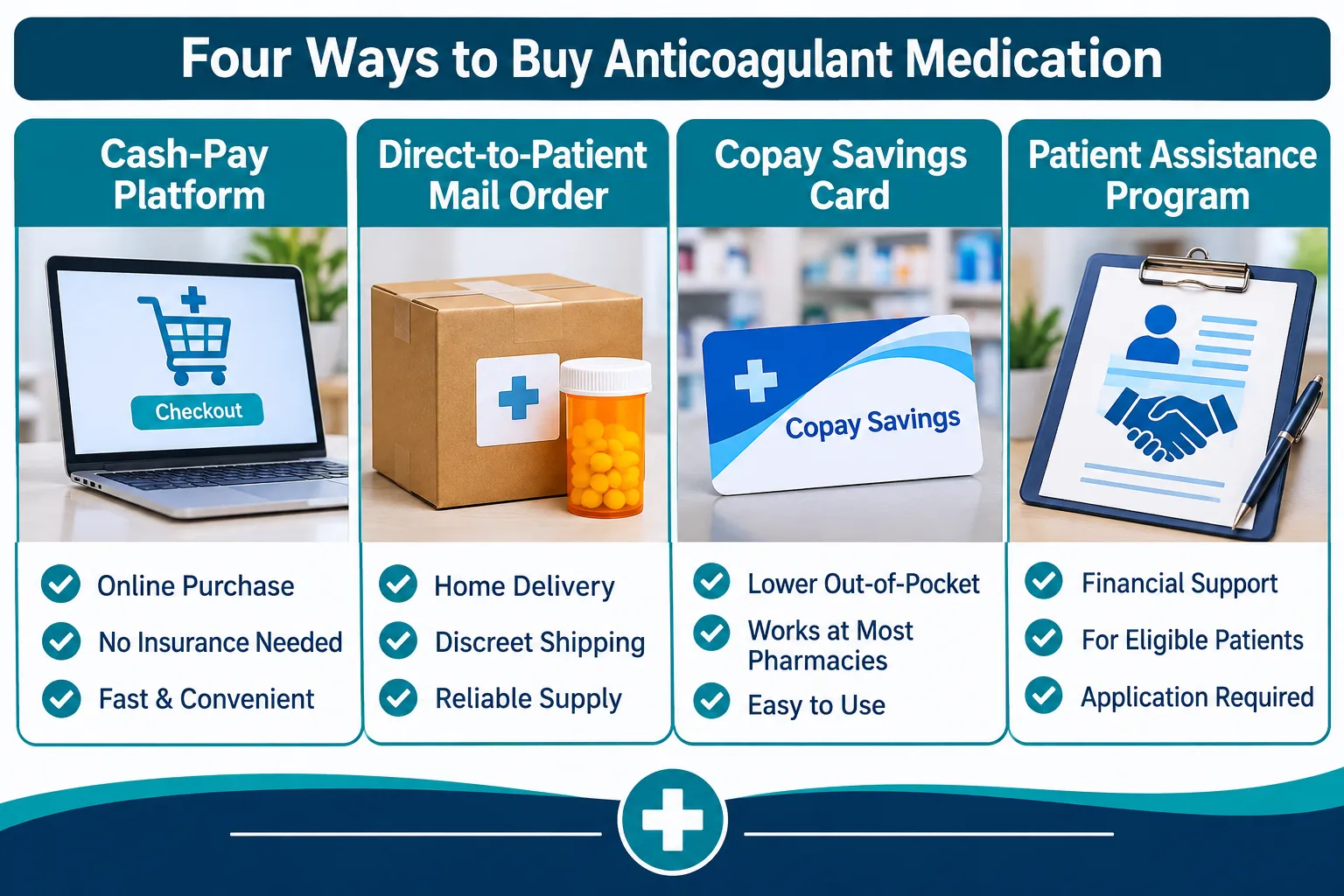
| Manufacturer copay card | $10,$30 per fill | Commercially insured patients, capped at $2,000/year [2][10] |
| Medicare Part D (negotiated) | ~$231 | Medicare beneficiaries after 2026 price negotiations [9] |
| Patient assistance program | $0 | Low-income, uninsured, or underinsured patients who qualify [1][10] |
Generic Alternatives and Cost Comparison
There is currently no generic apixaban available at U.S. retail pharmacies, despite FDA approval of generic versions in principle. Industry analysts expect broad generic entry, starting with 5 mg tablets, around April 2028 [5][6].
Until then, “generic Eliquis” searches won’t turn up a cheaper tablet at your local pharmacy, the brand-name drug is still the only retail option. That’s a key reason cash-pay programs like TrumpRx and Cost Plus Drugs matter so much right now: they’re substitutes for price competition that generics would normally create.
Manufacturer Coupons and Patient Assistance Programs
Bristol Myers Squibb offers a copay card through its E360 support program that can bring costs to $10 for a 30-day or first 90-day supply, and $30 for subsequent 90-day refills, for up to 24 months with a $2,000 annual cap; enrollment for current terms runs through December 31, 2026 [2][10]. Eligible low-income, uninsured, or underinsured patients may qualify for free Eliquis through the Bristol Myers Squibb Patient Assistance Foundation, based on income and residency criteria [1][10].
Common mistake: Assuming the copay card and the patient assistance foundation are the same program. The copay card requires commercial insurance; the foundation program is for patients without adequate coverage. Mixing them up means missing out on the benefit you actually qualify for.
Eliquis Cost at CVS, Walgreens, and Other Pharmacies
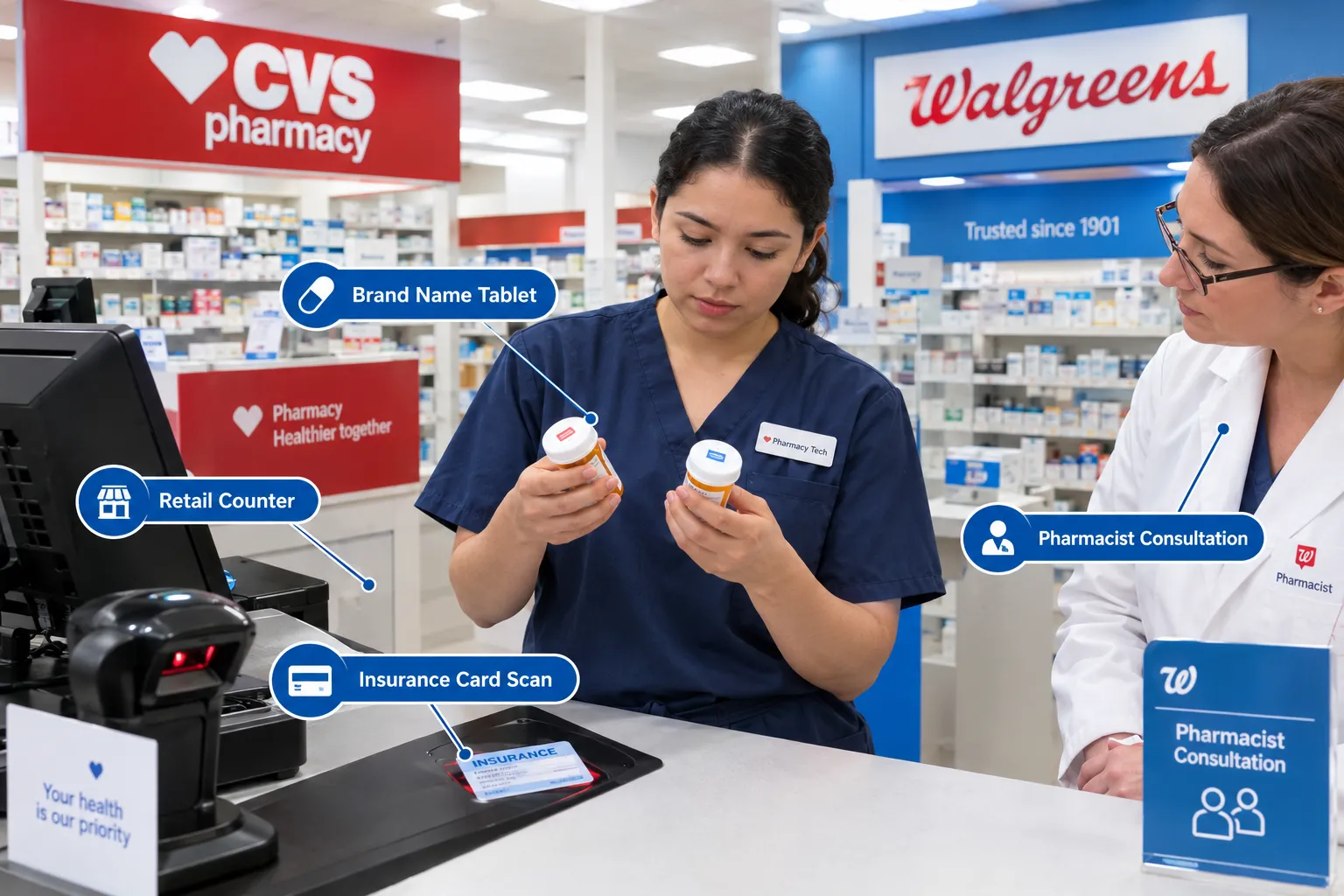
Cash prices for Eliquis vary by pharmacy chain and region, since each pharmacy sets its own retail markup on top of acquisition cost. Without a discount program, retail prices at chains like CVS and Walgreens can run several hundred dollars for a 30-day supply [1][4][6].
Using a coupon, a manufacturer card, or a cash-pay platform at the point of sale typically matters more than which chain you choose. A patient filling at Walgreens with a copay card and a patient filling at CVS with no discount at all will see wildly different totals, even for the identical tablet.
How to Get Eliquis Cheaper With TrumpRx and Other Programs
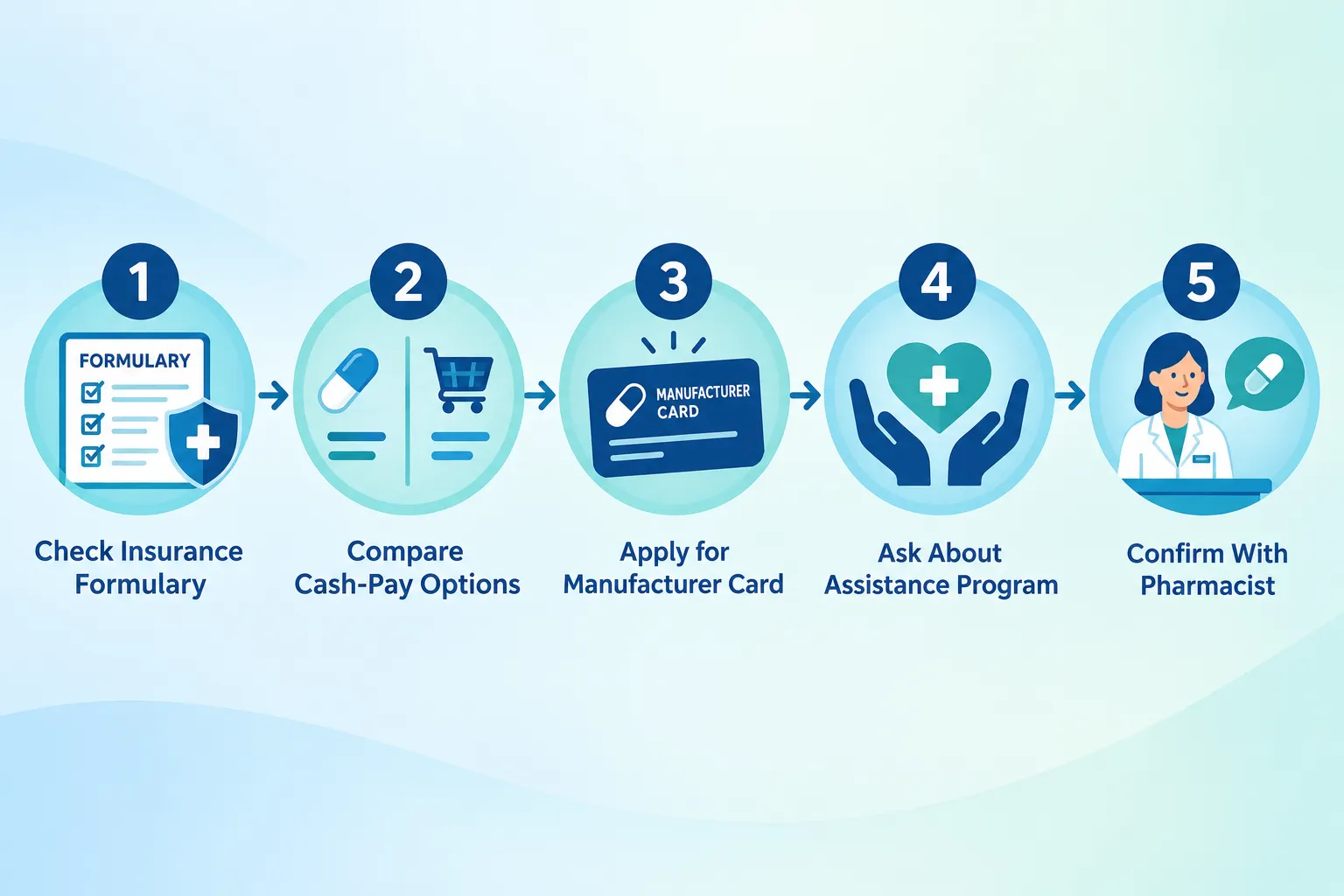
The fastest way to lower your Eliquis cost is to stack-check every available program before you fill a prescription, rather than assuming any single source, including TrumpRx, is automatically the cheapest. Each option has eligibility rules that determine whether it beats the others for your specific situation.
Checklist to follow before your next fill:
- Confirm whether your pharmacy benefit (insurance) covers Eliquis and at what tier.
- If insured commercially, apply for the manufacturer copay card first, it often beats TrumpRx for insured patients [2][10].
- If uninsured, compare the TrumpRx cash price against Cost Plus Drugs’ flat rate before ordering [3][6].
- If income-limited, apply to the Bristol Myers Squibb Patient Assistance Foundation for possible zero-cost medication [1][10].
- If on Medicare, check your Part D plan’s negotiated price before defaulting to a cash-pay platform [9].
- Ask your prescriber about the lowest effective dose and whether a 90-day supply reduces per-fill fees.
Example: A 68-year-old on Medicare Part D with atrial fibrillation will likely do better at the negotiated ~$231 rate than at the TrumpRx cash price of ~$346, since TrumpRx is designed for cash-pay patients, not Medicare enrollees [9].
What Insurance Plans Cover Eliquis
Most commercial health plans and Medicare Part D plans cover Eliquis, typically as a preferred or non-preferred brand-name drug with a copay or coinsurance tier. Medicaid coverage varies by state, and some Medicaid patients can get Eliquis at no cost [9].
- Commercial insurance: usually covers Eliquis, but tier placement affects your copay; combine with the manufacturer card for the lowest cost [2][10].
- Medicare Part D: covers Eliquis under the negotiated price structure, around $231 for a 30-day supply as of 2026 [9].
- Medicaid: coverage and cost-sharing vary by state; some patients pay nothing.
- TrumpRx: does not bill any insurance plan, it’s a parallel cash option, not a replacement for coverage [3][9].
Decision rule: Choose insurance-based coverage plus a manufacturer card if you’re commercially insured. Choose TrumpRx or Cost Plus Drugs only if you have no insurance or your plan doesn’t cover Eliquis at all.
Eliquis vs Warfarin: Cost and Effectiveness
Warfarin is far cheaper upfront than Eliquis but requires regular blood testing and carries more food and drug interaction risks, which can add indirect costs and inconvenience. Eliquis costs more per month but doesn’t require routine INR monitoring, which many patients and doctors see as a tradeoff worth the price difference.
- Warfarin: low drug cost, but needs frequent blood draws, dose adjustments, and dietary vigilance (vitamin K intake affects it).
- Eliquis: higher drug cost, fixed dosing, no routine monitoring, generally fewer dietary restrictions.
- Clinical choice often depends on kidney function, other medications, and how reliably a patient can get to monitoring appointments if warfarin is chosen.
Who it’s for: Patients who struggle to get regular lab draws, or who are on medications that interact heavily with warfarin, are often steered toward Eliquis despite the higher sticker price.
Is Eliquis Worth the Price Compared to Other Blood Thinners
For many patients with atrial fibrillation or clot history, Eliquis is considered worth the price because it avoids routine monitoring and has a well-documented safety profile, but “worth it” depends heavily on which discount program you can access. A patient paying full list price might reasonably look at alternatives; a patient using a copay card or patient assistance program often finds the cost gap with other anticoagulants shrinks dramatically [2][10].
- Choose Eliquis if: you need fixed dosing without lab monitoring and can access a copay card, TrumpRx, or assistance program.
- Choose warfarin if: drug cost is your top priority and you can reliably attend monitoring appointments.
- Choose a different direct oral anticoagulant (like rivaroxaban or dabigatran) if: your insurance formulary specifically favors it at a lower tier.
Eliquis Side Effects and Who Shouldn’t Take It
The most common Eliquis side effect is increased bleeding risk, ranging from minor bruising to serious internal bleeding in rare cases. People with active major bleeding, certain mechanical heart valves, or severe liver disease are generally advised against taking it.
- Common side effects: bruising, minor bleeding, nausea.
- Serious risks: gastrointestinal bleeding, bleeding after surgery, and spinal or epidural blood clots in patients receiving spinal procedures while on the drug.
- Not recommended for: patients with active pathological bleeding, certain prosthetic heart valves, or severe kidney or liver impairment without dose adjustment guidance from a doctor.
- Stopping Eliquis abruptly can raise stroke risk in atrial fibrillation patients, so any discontinuation should be supervised by a physician.
Diet and lifestyle support heart health alongside medication; readers managing cardiovascular risk may find it useful to review general wellness strategies or heart-friendly plant-based recipes as a complement to anticoagulant therapy, not a replacement for it.
Common Mistakes People Make With Eliquis Dosing
The most frequent dosing mistake is skipping or doubling doses after a missed pill, which can either raise clotting risk or bleeding risk depending on which error occurs. Eliquis has a short half-life compared to warfarin, so missed doses matter more than many patients realize.
- Mistake: doubling up after a missed dose. Correct approach: take the missed dose as soon as remembered unless it’s almost time for the next one, then skip the missed dose.
- Mistake: stopping the drug before surgery without medical guidance. Correct approach: follow your surgeon’s and prescriber’s specific timeline for pausing and restarting.
- Mistake: not adjusting dose for age, weight, or kidney function criteria. Correct approach: confirm with your prescriber whether you meet criteria for the lower 2.5 mg twice-daily dose.
- Mistake: combining with NSAIDs or other blood thinners without medical supervision, which raises bleeding risk significantly.
What Happens If You Can’t Afford Eliquis
If you can’t afford Eliquis, the priority is contacting your prescriber immediately rather than skipping doses or stopping cold turkey, since abrupt discontinuation can raise stroke or clot risk. Several financial paths exist specifically for this situation.
- Apply to the Bristol Myers Squibb Patient Assistance Foundation, which can provide the drug at no charge to eligible low-income or uninsured patients [1][10].
- Ask your prescriber about short-term samples while you sort out a longer-term assistance plan.
- Compare TrumpRx, Cost Plus Drugs, and the manufacturer copay card side by side, one of them is almost always cheaper than unassisted retail price [2][3][6][10].
- If switching to a lower-cost anticoagulant like warfarin is clinically appropriate, discuss it with your doctor rather than deciding alone.
Edge case: A real-world report from October 2026 described a patient whose Eliquis refill jumped from under $30 to over $70 despite multiple discount programs existing, showing that even insured patients can face sudden cost spikes and should proactively ask their pharmacy and prescriber about alternatives before a refill, not after [8].
Eliquis for Atrial Fibrillation vs Other Conditions: Does Pricing Change
The tablet, dose, and price of Eliquis do not change based on which condition it treats, atrial fibrillation, DVT, or pulmonary embolism patients all access the same pricing programs. What can change is insurance prior authorization requirements, since some plans require documented atrial fibrillation diagnosis codes for coverage approval.
- Atrial fibrillation patients: typically long-term, ongoing therapy, so copay cards and assistance programs matter most for sustained affordability.
- DVT/pulmonary embolism patients: often shorter treatment courses (3-6 months), so a cash-pay option like TrumpRx or Cost Plus Drugs might make more financial sense than a long-term program with complex enrollment.
- Post-surgical clot prevention: usually a short course, making a one-time cash payment through TrumpRx or a 30-day Cost Plus Drugs order practical.
For readers managing broader cardiovascular or metabolic risk factors tied to these conditions, resources on men’s health and women’s health can provide additional context on prevention strategies that work alongside anticoagulant therapy.
Conclusion
The honest takeaway from this TrumpRx Eliquis Price Breakdown is that no single program wins for every patient. TrumpRx’s roughly $346 cash price helps uninsured patients who would otherwise pay full retail, but insured patients usually do better with the manufacturer copay card, Medicare Part D’s negotiated rate, or a patient assistance program if income-qualified [2][3][9][10]. Generic apixaban isn’t on pharmacy shelves yet, so stacking today’s available discounts is the real strategy, not waiting for a cheaper tablet [5][6].
Next steps: check your insurance formulary this week, call the Eliquis copay card line if you’re commercially insured, and compare TrumpRx against Cost Plus Drugs if you’re paying cash. If cost is forcing you to skip doses, talk to your prescriber immediately rather than stopping on your own, the financial problem has solutions, but untreated atrial fibrillation or an untreated clot risk does not. For broader health and lifestyle support while managing a long-term prescription budget, explore more at Health Trust MD or review options tailored to weight management as part of overall cardiovascular care.
FAQ
Is TrumpRx the cheapest way to buy Eliquis? Not always. TrumpRx offers a cash-pay price of about $346 a month, but insured patients using the manufacturer copay card often pay $10 to $30 per fill instead, which is cheaper than TrumpRx [2][3][10].
Does Eliquis have a generic version yet? No. As of 2026, no generic apixaban is sold in U.S. retail pharmacies. Broad generic availability, starting with 5 mg tablets, is expected around April 2028 [5][6].
How much is Eliquis with Medicare? Medicare Part D enrollees can access Eliquis at a negotiated price of about $231 for a 30-day supply following 2026 federal price negotiations [9].
Can I use TrumpRx if I have insurance? TrumpRx is built for cash-pay transactions and does not process insurance claims. If you have insurance, check your copay through your plan and the manufacturer card first [3][9].
What is the manufacturer copay card worth for Eliquis? Eligible commercially insured patients can pay as little as $10 for a 30-day or first 90-day supply, and $30 for later 90-day refills, up to a $2,000 annual cap, through December 31, 2026 [2][10].
Who qualifies for free Eliquis through patient assistance? Low-income, uninsured, or underinsured patients who meet income and residency criteria may qualify for no-cost Eliquis through the Bristol Myers Squibb Patient Assistance Foundation [1][10].
Is Eliquis safe for everyone? No. Eliquis is not recommended for patients with active major bleeding, certain prosthetic heart valves, or severe liver impairment without specific medical guidance.
What should I do if I miss an Eliquis dose? Take the missed dose as soon as you remember unless it’s almost time for your next scheduled dose, then skip it. Never double up to make up for a missed pill.
References
[1] Eliquis – https://www.drugs.com/price-guide/eliquis [2] Price – https://www.eliquis.bmscustomerconnect.com/price [3] Trump Rx Medicine Drugs Health Care Pfizer Low Prices Gilead – https://www.npr.org/2026/07/16/nx-s1-5894947/trump-rx-medicine-drugs-health-care-pfizer-low-prices-gilead [4] Eliquis – https://www.goodrx.com/eliquis [5] Eliquis – https://hellopharmacist.com/drug-launches/generics/eliquis [6] Eliquis – https://www.singlecare.com/prescription/eliquis [7] Trumprx At 6 Months Has The Drug Pricing Experiment Delivered – https://www.beckershospitalreview.com/pharmacy/trumprx-at-6-months-has-the-drug-pricing-experiment-delivered/ [8] Midterms Election Trump Drug Prices Affordability – https://www.nytimes.com/2026/10/16/business/midterms-election-trump-drug-prices-affordability.html [9] What Is Trumprx Will It Make Drugs Cheaper Helps Only A Little Health Insurance – https://fortune.com/2026/02/11/what-is-trumprx-will-it-make-drugs-cheaper-helps-only-a-little-health-insurance/ [10] Resources – https://www.eliquis.com/eliquis/hcp/resources