TrumpRx Mounjaro Price: Out-of-Pocket Costs and Coupon Savings
Last updated: October 17, 2026
Quick Answer
TrumpRx lists Mounjaro at a headline price of $499 for a one-month supply for eligible self-pay and commercially insured patients, routed through Eli Lilly’s direct-to-consumer channel rather than sold by TrumpRx itself [1]. Without any discount, Mounjaro’s cash price typically runs well over $1,000 a month [10]. The TrumpRx Mounjaro price works best for people without Medicare or Medicaid, and eligibility rules are not fully transparent, so confirming the exact discount before you fill a prescription matters.
Key Takeaways
- TrumpRx is a government-linked discount directory, not a pharmacy; it sends Mounjaro shoppers to Eli Lilly’s LillyDirect ordering system [1].
- The advertised $499 TrumpRx Mounjaro price appears to mirror Lilly’s existing commercial-insurance savings card rate, not a brand-new government-negotiated price.
- Full cash price for Mounjaro without any coupon or insurance can exceed $1,000 to $1,300 per month depending on the pharmacy [10].
- Medicare and Medicaid patients generally cannot combine federal benefits with manufacturer coupons, so the $499 figure mainly applies to commercially insured or self-pay patients.
- GoodRx and similar discount cards sometimes beat manufacturer pricing for certain doses, so it pays to compare before committing to one channel.
- Mounjaro has no FDA-approved generic yet, though compounded tirzepatide and lower-cost alternatives like Ozempic are sometimes cheaper depending on insurance.
- A single Mounjaro pen typically lasts one month (four weekly doses), so the refill cost repeats monthly unless your dose or supply size changes.
What Is Mounjaro and What Does It Treat
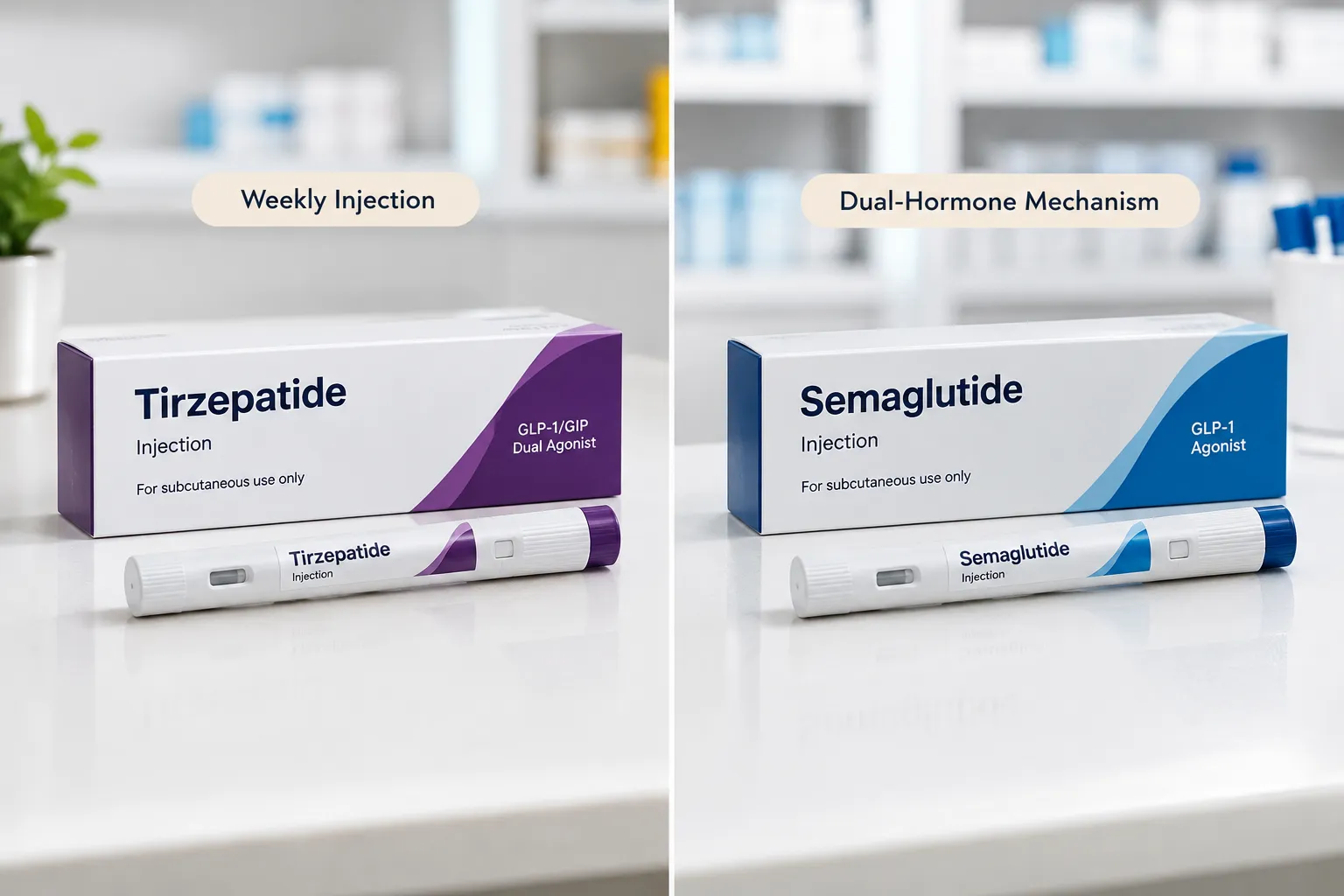
Mounjaro is the brand name for tirzepatide, an injectable medication approved by the FDA for adults with type 2 diabetes to improve blood sugar control alongside diet and exercise [1]. It belongs to a drug class that activates both GLP-1 and GIP hormone receptors, which is part of why it tends to produce stronger blood sugar and weight effects than single-receptor drugs.
Doctors prescribe Mounjaro as a once-weekly subcutaneous injection, usually starting at a low dose and increasing gradually. Key facts about the drug:
- Approved indication: type 2 diabetes management, not primarily weight loss (Lilly markets tirzepatide for weight loss separately under the name Zepbound).
- Delivery method: prefilled single-dose pens, injected under the skin in the abdomen, thigh, or upper arm.
- Typical dosing range: 2.5 mg to 15 mg weekly, titrated by a prescriber over several months.
- Common off-label use: some clinicians prescribe Mounjaro for weight management in patients without diabetes, which affects insurance coverage significantly.
Choose Mounjaro if your doctor has diagnosed type 2 diabetes and you need an additional option beyond metformin or other first-line drugs. If weight loss is your primary goal, ask your prescriber whether Zepbound fits your insurance formulary better, since payers treat the two drugs differently despite the shared active ingredient.
How Much Does Mounjaro Cost Without Insurance
Without insurance or a coupon, Mounjaro’s list price runs roughly $1,000 to $1,300 for a one-month supply, depending on the pharmacy and dose [10]. That price reflects the manufacturer’s wholesale acquisition cost plus standard pharmacy markup, not any special program pricing.
Cash prices vary by:
- Dose strength: Higher-dose pens (12.5 mg, 15 mg) sometimes cost the same as lower doses because pricing is often per-pen rather than per-milligram, but this varies by pharmacy.
- Pharmacy type: Large chain pharmacies and independent pharmacies can differ by $50 to $150 for the identical product.
- Location: State-level pricing regulations and local market competition shift prices by region.
- Quantity dispensed: A 1-pen supply versus a 4-pen (one-month, four-week) box changes the total, so always confirm what “one fill” actually contains.
A common mistake is assuming the pharmacy counter price is fixed. It’s not. Pharmacies set their own retail markup on top of the wholesale cost, so calling two or three pharmacies in your area before filling a new prescription can reveal real differences, sometimes in the hundreds of dollars.
TrumpRx Mounjaro Price: Out-of-Pocket Costs and Coupon Savings Explained
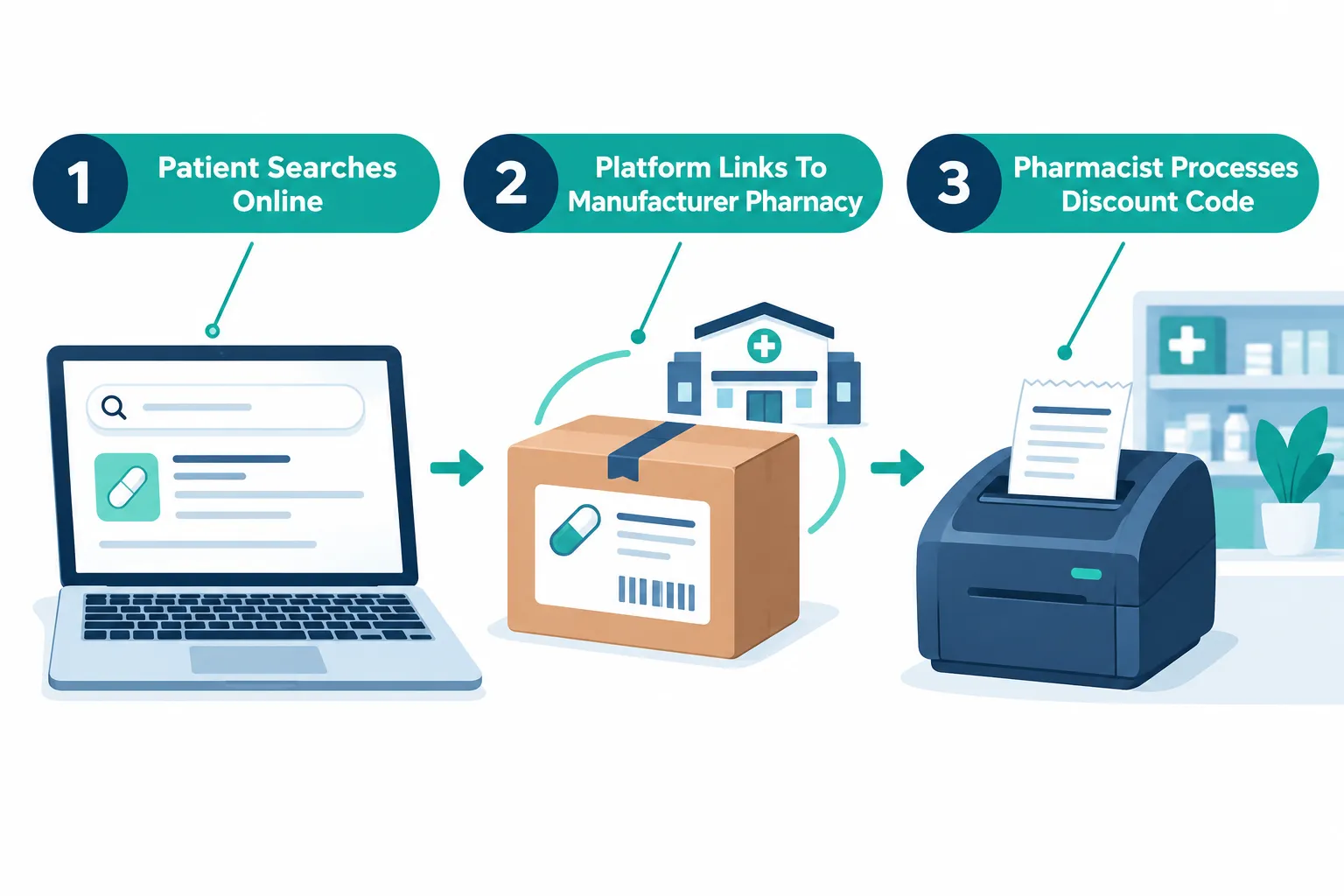
The TrumpRx Mounjaro price of $499 per month is a coupon-routing offer, not a government-set price; TrumpRx directs eligible shoppers to Lilly’s own LillyDirect ordering platform where the discount is actually applied [1]. Understanding this distinction is the single most important thing to know before you expect that price at your local pharmacy counter.
Here’s how the mechanics actually work:
- TrumpRx hosts a product page. The Mounjaro listing on trumprx.gov shows the $499 figure and links out, functioning more like a comparison directory than a storefront [1].
- The click routes to Lilly’s direct channel. LillyDirect, Eli Lilly’s branded telehealth and home-delivery service, processes the actual order and applies the discount.
- Eligibility gets checked at that stage. Commercial insurance status, self-pay status, and sometimes state of residence determine whether the $499 rate applies.
- The pharmacy or mail-order fulfillment happens separately. Depending on the program, the medication may ship directly rather than get picked up at a local retail pharmacy.
Pharmacy benefit experts have flagged that the $499 TrumpRx Mounjaro price closely resembles Lilly’s pre-existing commercial-insurance savings card rate rather than a new, lower government-negotiated price [1]. That ambiguity matters: if you already qualify for Lilly’s standard savings card, the TrumpRx listing may not save you anything extra beyond what you could get directly from the manufacturer.
Edge case: If you have Medicare, Medicaid, Tricare, or another federal health program, manufacturer coupons like this one typically cannot be applied by law. The $499 price is realistically aimed at commercially insured and cash-pay patients only.
Mounjaro Price With GoodRx or Other Discount Cards
GoodRx and similar discount cards can lower Mounjaro’s cash price at participating pharmacies, sometimes to a level competitive with manufacturer coupons, though exact savings vary by location and dose [9]. Because these cards work differently than manufacturer copay programs, it’s worth comparing both before you pick a pharmacy.
Key differences between discount cards and manufacturer coupons:
| Feature | Discount Card (e.g., GoodRx) | Manufacturer Coupon (TrumpRx/LillyDirect) |
|---|---|---|
| Works with insurance | No, used instead of insurance | Sometimes stacks with commercial insurance |
| Eligibility restrictions | Minimal, open to most shoppers | Often excludes Medicare/Medicaid |
| Where redeemed | Most retail pharmacies | Often requires LillyDirect or specific pharmacy |
| Price consistency | Varies by pharmacy and region | Usually fixed amount nationwide |
Decision rule: Choose a discount card if you want flexibility to fill at any nearby pharmacy and you don’t qualify for manufacturer savings programs. Choose the manufacturer route if you have commercial insurance and meet the coupon’s eligibility terms, since the savings can be deeper.
A practical tip: pharmacist-facing discount programs similar to CVS’s prescription savings resources show that posted discount percentages can shift monthly, so always ask the pharmacist to run the card at the counter rather than assuming an online quote is final [9].
Mounjaro Copay Assistance Program Eligibility
Mounjaro’s manufacturer copay assistance program is generally limited to patients with commercial (private) insurance who have Mounjaro coverage on their plan but still face a copay; patients on government insurance typically do not qualify [1]. This is a standard restriction across nearly all manufacturer copay cards in the United States, not unique to Lilly.
Typical eligibility criteria include:
- Active commercial or employer-sponsored insurance that includes Mounjaro on its formulary.
- A valid prescription for an FDA-approved use (type 2 diabetes).
- U.S. residency and enrollment through the manufacturer’s savings card portal.
- Annual or lifetime savings caps, meaning the card reduces your copay but does not necessarily make the drug free indefinitely.
Common mistake: Many patients assume a manufacturer savings card guarantees a flat $499 price regardless of their insurance copay. In reality, these cards usually cap the dollar amount of savings per fill or per year, so your actual out-of-pocket cost depends on what your insurance already covers.
Is Mounjaro Covered by Medicare or Medicaid
Medicare Part D and most state Medicaid programs do not cover Mounjaro when prescribed solely for weight loss, but many plans do cover it when prescribed for an FDA-approved indication like type 2 diabetes, subject to prior authorization. Coverage rules differ by state Medicaid program and by individual Part D plan formulary, so there’s no single nationwide answer.
What typically determines coverage:
- Diagnosis code on the prescription: Diabetes diagnoses have a much higher chance of approval than weight-management-only diagnoses.
- Prior authorization requirements: Most plans require documentation of diagnosis, prior treatment attempts, and sometimes lab results (A1C levels).
- Formulary tier placement: Even when covered, Mounjaro often sits on a high specialty tier, meaning higher coinsurance percentages.
- Step therapy rules: Some plans require trying metformin or other cheaper diabetes drugs first.
Because manufacturer coupons generally cannot be combined with Medicare or Medicaid, patients on these programs who get a denial or high copay have fewer discount options than commercially insured patients. In that case, check with your plan’s appeals process or ask your prescriber about a formulary exception request before assuming you’re stuck paying full price.
Mounjaro vs Ozempic Cost Comparison
Mounjaro and Ozempic have similar list prices before discounts, but coupon structures and insurance coverage patterns differ enough that your actual out-of-pocket cost can vary significantly between the two drugs. Ozempic also appears on TrumpRx with its own manufacturer-linked discount listing, giving a useful side-by-side reference point [6].
Practical differences to weigh:
- Approved use: Mounjaro and Ozempic are both approved for type 2 diabetes; neither is primarily a weight-loss brand (that role belongs to their sister drugs Zepbound and Wegovy).
- Mechanism: Ozempic activates only the GLP-1 receptor; Mounjaro activates both GLP-1 and GIP receptors, which some patients and prescribers associate with different side-effect profiles and efficacy.
- Coupon routing: Both drugs currently show manufacturer-style discount listings through TrumpRx, with Ozempic’s offer structured similarly to Mounjaro’s self-pay/commercial-insurance model [6].
- Insurance formulary placement: Some insurance plans prefer one drug over the other based on manufacturer rebate agreements, which can make one significantly cheaper for you even if list prices are close.
Choose Mounjaro if your doctor believes the dual-receptor mechanism suits your diabetes management better, and your insurance formulary places it in a favorable tier. Choose Ozempic if your plan covers it more favorably or your prescriber has a specific clinical reason to prefer a GLP-1-only mechanism.
Why Is Mounjaro So Expensive
Mounjaro’s high price reflects a mix of patent protection, complex manufacturing, high research and development costs tied to its dual-receptor mechanism, and strong market demand that gives the manufacturer pricing power. Because no generic version exists yet, Eli Lilly sets the price without direct generic competition.
Contributing factors include:
- No generic competition: Patent protection means tirzepatide has no FDA-approved generic equivalent as of this writing.
- Manufacturing complexity: Injectable peptide drugs require specialized production facilities, which raises per-unit costs compared with simple pills.
- High demand: Surging interest in GLP-1/GIP drugs for both diabetes and weight management has outpaced manufacturing capacity in past years, supporting premium pricing.
- Insurance rebate system: List prices in the U.S. often get set artificially high so manufacturers can offer rebates to insurers and pharmacy benefit managers, a pricing quirk that affects almost all brand-name specialty drugs, not just Mounjaro.
This is also the core reason programs like TrumpRx exist: they attempt to shortcut some of that rebate complexity by offering a flatter, more predictable self-pay or commercial-insurance price directly from the manufacturer [1].
Mounjaro Generic Alternative or Cheaper Options
There is currently no FDA-approved generic version of Mounjaro, so “cheaper alternatives” mostly means different brand-name drugs, compounded tirzepatide from specialty pharmacies, or lifestyle-based diabetes management rather than a true generic equivalent. Patients should understand the tradeoffs before switching.
Options patients sometimes consider:
- Compounded tirzepatide: Offered by some compounding pharmacies, often at a lower price, but these are not FDA-approved finished products and carry quality and safety variability that the FDA has repeatedly flagged as a concern.
- Older diabetes drugs: Metformin, sulfonylureas, and other long-generic diabetes medications cost a fraction of Mounjaro but may not deliver the same weight or blood sugar benefits.
- Other GLP-1 drugs: Ozempic, Trulicity, or Victoza may be cheaper under your specific insurance formulary even though none of them are literal generics.
- Patient assistance foundations: Independent nonprofit copay foundations occasionally offer grants for diabetes medications, separate from manufacturer coupons, with their own eligibility rules.
Edge case: If your insurance denies Mounjaro but approves a different GLP-1 drug, ask your prescriber whether switching makes clinical sense before assuming you must pay cash for Mounjaro specifically.
How to Get Mounjaro for Free or Low Cost
The most realistic paths to low-cost or free Mounjaro are manufacturer copay cards for insured patients, the TrumpRx-linked LillyDirect self-pay price for eligible self-pay patients, and nonprofit patient assistance programs for those who qualify by income. No legitimate program currently offers Mounjaro completely free to the general public without meeting specific criteria.
A practical checklist:
- Check your insurance formulary first. If Mounjaro is covered, ask your pharmacy to run a manufacturer copay card on top of your insurance.
- Compare the TrumpRx-linked LillyDirect self-pay price against local cash prices. If you’re uninsured or your plan doesn’t cover Mounjaro, the $499 offer may beat retail cash pricing significantly [1].
- Ask about income-based patient assistance. Eli Lilly and some independent foundations run separate programs for patients below certain income thresholds; eligibility is stricter than standard copay cards.
- Run a discount card comparison through GoodRx-style services before filling, since in some ZIP codes a discount card can beat even the manufacturer’s self-pay rate [9].
- Ask your prescriber about sample pens. Some clinics keep manufacturer samples for new patients starting treatment, which can bridge a gap while you sort out coverage.
Mounjaro Savings Card: How Much Do You Save With TrumpRx Mounjaro Price Discounts
Savings from the TrumpRx Mounjaro price listing depend heavily on your starting point: patients paying full cash price could see savings of several hundred dollars per month moving to the $499 rate, while already-insured patients with a low copay may see little to no additional benefit [1] [10]. The dollar savings is not a fixed number across all patients, which is the main point of confusion online.
Other TrumpRx-linked drugs illustrate the same pattern. The platform’s Protonix and Wegovy listings function as similar coupon-routing mechanics, directing shoppers to manufacturer-run discount programs rather than offering a universal flat government price [4] [8]. That consistency across multiple drugs supports the interpretation that TrumpRx mainly aggregates and displays existing manufacturer discount programs rather than negotiating brand-new prices.
Mounjaro Price at Different Pharmacies: Walmart vs CVS
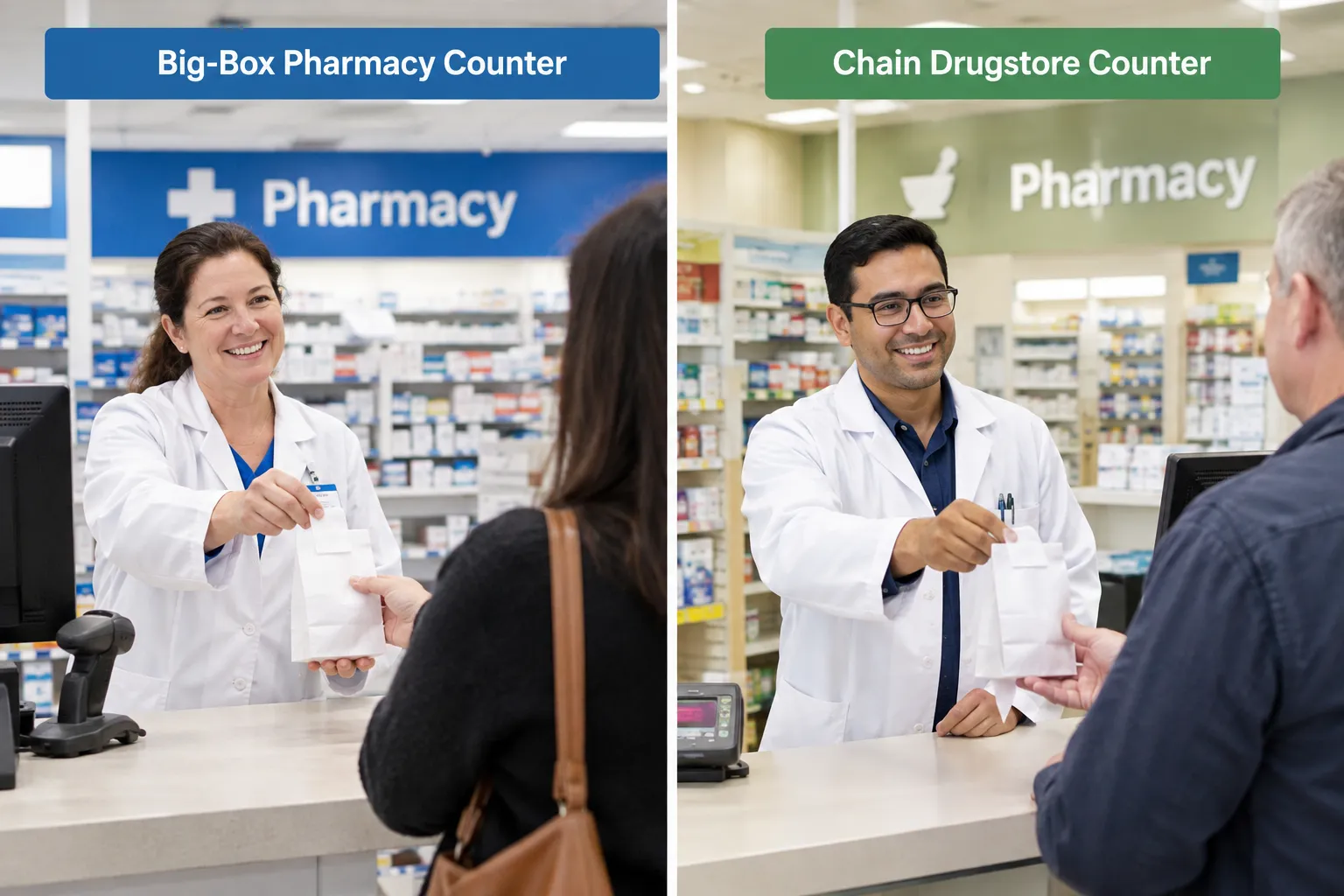
Mounjaro’s cash price can differ by pharmacy chain, with large retailers like Walmart sometimes pricing slightly lower than traditional chain drugstores like CVS, though the gap is usually modest compared with coupon or manufacturer savings [9] [10]. Because pricing isn’t standardized across chains, calling ahead remains the most reliable way to confirm current pricing.
Factors that create pharmacy-to-pharmacy differences:
- Negotiated wholesale rates: Large chains negotiate different acquisition costs with wholesalers, which flows through to retail pricing.
- Local competition: Pharmacies in competitive markets sometimes price specialty drugs more aggressively to retain customers.
- Participation in discount networks: Not every pharmacy accepts every discount card or coupon, so a lower “listed” price online doesn’t always mean you’ll pay that amount at a specific counter.
- Specialty pharmacy requirements: Some insurance plans require Mounjaro to be filled through a designated specialty pharmacy rather than a regular retail location, which can override typical chain pricing comparisons entirely.
Quick example: A patient comparing a Walmart pharmacy quote against a CVS quote for the same Mounjaro dose might see a difference of $50 to $150 in cash price, but that gap is often small next to the several-hundred-dollar swing possible with a manufacturer coupon or copay card [9] [10].
Does Insurance Cover Mounjaro for Weight Loss vs Diabetes
Insurance plans overwhelmingly cover Mounjaro more readily for type 2 diabetes than for weight loss, because weight-loss use is considered off-label for this specific brand and often falls outside standard formulary approval criteria. This distinction drives a large share of coverage denials that patients encounter.
Why the distinction matters so much:
- FDA-approved indication: Mounjaro’s official approval is for diabetes; Lilly markets the same active ingredient as Zepbound specifically for weight management.
- Insurer formulary logic: Payers build coverage rules around FDA-approved indications, so a diabetes diagnosis code supports approval while a weight-loss-only diagnosis frequently triggers denial.
- Employer plan design: Some employers specifically exclude weight-loss drug coverage from their benefit plans regardless of which brand is prescribed.
- Prior authorization paperwork: Even diabetes patients may need lab results (like A1C levels) and documentation of prior treatments before approval.
Decision rule: If weight loss is the primary goal and insurance coverage matters to you, ask your prescriber whether Zepbound might be a better-covered option than Mounjaro, since insurers often treat the two brands differently despite the shared drug.
Mounjaro Pen Refill Cost and How Long Does One Pen Last
A standard Mounjaro pen is designed for a single weekly injection, meaning a one-month supply typically includes four pens, and the refill cost repeats on that same four-week cycle unless your prescriber changes your dose or supply size. Refill costs mirror the same out-of-pocket factors as your first fill: insurance coverage, coupon eligibility, and pharmacy pricing.
Important details about refill timing and cost:
- Standard supply: Most prescriptions are written for a 28-day (four-pen) supply per fill.
- Dose escalation periods: When your doctor increases your dose, you may receive a different box or strength, which can briefly change pricing until you’re stabilized on a maintenance dose.
- Coupon renewal: Manufacturer savings cards and TrumpRx-linked offers generally need to be reapplied or verified at each refill, not just at the first fill, so don’t assume the discount carries over automatically.
- 90-day supply options: Some insurance plans and mail-order pharmacies offer a 90-day supply, which can reduce per-month handling fees but requires upfront authorization.
Common mistake: Assuming your discount or coupon automatically applies to every future refill. Pharmacy and coupon systems sometimes require re-verification monthly, especially with manufacturer programs tied to insurance status checks.
Frequently Asked Questions
Is the TrumpRx Mounjaro price of $499 guaranteed for everyone? No. The $499 price generally applies to self-pay or commercially insured patients who qualify through Lilly’s LillyDirect channel; Medicare and Medicaid patients typically cannot use it [1].
Is TrumpRx an actual pharmacy? No. TrumpRx functions as a discount listing and routing platform that links shoppers to manufacturer-run ordering systems like LillyDirect rather than dispensing medication itself [1].
Can I use a GoodRx coupon and a manufacturer coupon together? No. Pharmacies apply only one discount method per fill, so you need to choose whichever option, discount card or manufacturer coupon, gives you the lower price for your specific situation [9].
Does Mounjaro cost the same at every pharmacy? No. Cash prices vary by chain and location, though the gap is usually smaller than the savings available through a manufacturer coupon or discount card [9] [10].
Will insurance cover Mounjaro if I only want to lose weight? Usually not. Mounjaro is FDA-approved for type 2 diabetes, and most insurers treat weight-loss-only use as off-label, which frequently leads to denial.
Is there a generic version of Mounjaro? Not currently. Tirzepatide remains under patent protection, so no FDA-approved generic exists as of this writing.
How much does one Mounjaro pen cost without insurance? A single pen’s cost varies, but a full one-month (four-pen) supply without insurance or discounts commonly runs well over $1,000 depending on pharmacy and dose [10].
Do I need to reapply the TrumpRx or manufacturer coupon every month? Often yes. Many manufacturer savings programs require re-verification or reactivation at each refill rather than applying automatically forever.
Conclusion
The TrumpRx Mounjaro price of $499 can genuinely lower your monthly cost if you’re self-pay or commercially insured and meet the program’s eligibility terms, but it is not a universal price and it is not a government-negotiated discount separate from Lilly’s existing savings card structure [1]. Before you count on that number, verify your own insurance status, confirm eligibility directly through the LillyDirect link on the TrumpRx listing, and call your local pharmacy to compare their cash price and any applicable discount card rate.
Next steps worth taking this week: ask your prescriber whether your diagnosis code supports insurance coverage, compare at least two pharmacies’ cash prices, and check whether a manufacturer copay card or a discount card service saves you more in your specific situation. For broader context on weight management options and related treatment paths, see our additional resources on weight loss strategies and wellness guidance, and explore women’s health or men’s health topics if you’re weighing how a GLP-1 medication fits your broader care plan. You can also browse our home page for more practical medication cost guides, or check our plant-based recipe guides if lifestyle changes are part of your diabetes or weight management strategy alongside medication.
References
[1] Mounjaro – https://trumprx.gov/p/mounjaro [4] Wegovy – https://trumprx.gov/p/wegovy [6] Ozempic – https://trumprx.gov/print/ozempic [8] Protonix – https://trumprx.gov/p/protonix [9] Prescription Savings – https://www.cvs.com/content/prescription-savings [10] Cost – https://scriptreceipt.com/mounjaro/cost/